AI Robotic Surgery: Where Precision Meets Innovation
Published: 24 May 2026
Surgery used to mean bigger cuts, longer recovery, and steady hands doing all the work. Today, that’s changing fast.
Hospitals worldwide are turning to AI robotic surgery and smart surgical systems for sharper precision and control during complex procedures, moving past the limits of traditional surgery like larger incisions, longer healing, and physical strain on surgeons.
By combining artificial intelligence, robotic arms, and real-time imaging, these systems make minimally invasive surgery possible, meaning smaller incisions, less pain, and faster recovery. Platforms like the da Vinci Surgical System already power cardiac, prostate, orthopedic, and cancer surgeries worldwide.
In this article, you’ll learn how AI robotic surgery works, its key technologies, real-world applications, benefits, challenges, and where autonomous surgery is headed next.
What Is AI in Robotic Surgery and Smart Surgical Systems?
AI in robotic surgery refers to the use of robotic technology, artificial intelligence, and advanced imaging to help surgeons operate with more precision, control, and safety during complex procedures.
Instead of using traditional tools by hand, surgeons control robotic surgery arms through a console, and the system translates their movements into highly precise actions inside the body. Adding AI to this process brings even more capability:
- Analyzes patient data for better surgical planning
- Improves navigation and imaging interpretation during procedures
- Supports clinical decision-making in real time
- Boosts workflow efficiency and surgical accuracy
History and Development of Robotic Surgery
Robotic surgery started as computer-assisted systems for improving precision, originally developed for military and research use before entering healthcare.
- The da Vinci Surgical System became one of the most widely used robot-assisted surgery platforms, bringing minimally invasive procedures into mainstream hospitals
- Over time, AI, machine learning, and real-time imaging pushed robotic surgery systems even further
- Institutions like Johns Hopkins University are now researching autonomous surgical robots for highly complex, AI-supported procedures
Why AI Robotic Surgery Is Important
When a scalpel is off by even a millimeter, the outcome can change everything. That’s exactly why hospitals are turning to AI robotic surgery for procedures that leave no room for error.
Surgeries involving the heart, brain, prostate, or spine demand extreme precision, and robot-assisted surgery delivers it. Smart surgical systems give surgeons steadier control, better stability, and sharper accuracy than ever before.
- Enables minimally invasive surgery with smaller incisions, less blood loss, and faster healing
- Uses real-time imaging and surgical navigation to reduce complications
- Improves operating room coordination and overall workflow efficiency
- Supports growing patient demand through smarter healthcare automation
Challenges in Traditional Surgical Procedures
Manual surgery has served medicine well for decades, but it has limits.
- Larger incisions mean more pain, blood loss, and infection risk
- Surgeons face restricted visibility and movement in sensitive areas
- Long operations cause fatigue, which can affect consistency
These gaps are exactly why AI robotic surgery and smart surgical systems are gaining ground fast.
Importance of Precision in Complex Surgeries
One wrong move near a nerve or blood vessel can change a patient’s life. That is why precision matters so much in surgeries involving delicate organs and tissue.
- Robotic surgery arms and high-definition cameras stabilize every movement
- Procedures like robotic prostate, cardiac, neurological, and orthopedic surgery rely on this accuracy
- AI-assisted visualization helps surgeons handle the most complex cases with confidence
Growth of Robotic Surgery Systems Worldwide
Robotic surgery is no longer rare. It’s becoming standard.
- The da Vinci Surgical System now supports knee replacement, prostate, gynecologic, and cardiac surgeries worldwide
- Research teams, including those at Johns Hopkins University, are developing autonomous surgical robots for the next generation of precision healthcare
- AI-powered operating systems are reshaping what’s possible in modern surgery
Types of Robotic Surgery Systems
Not all robotic surgery works the same way. Depending on how much control the surgeon keeps versus the machine, AI robotic surgery systems fall into three main types, each built for a different kind of precision.
Supervisory-Controlled Robotic Surgery Systems
Here, the robot does the heavy lifting while the surgeon watches closely.
- Surgeons plan and monitor while the robotic system carries out pre-programmed, highly controlled movements
- Best suited for repetitive, precision-focused procedures where consistency matters most
- AI analyzes surgical data in real time to improve movement coordination and reduce manual errors
Telesurgical and Remote Robotic Surgery Systems
Distance is no longer a barrier in the operating room.
- Surgeons control robotic instruments remotely through computer-guided consoles
- High-definition cameras and real-time data transmission keep movement control precise, even from another location
- The da Vinci Surgical System remains one of the most recognized platforms enabling this kind of remote, robot-assisted surgery
Shared-Control Robotic Surgery Systems
This is teamwork between human skill and machine precision.
- The surgeon stays fully in control while the robotic system stabilizes movement and guides positioning
- AI-assisted technology reduces hand tremors and improves accuracy during delicate procedures
- Commonly used in knee replacement, cardiac, neurological, and other minimally invasive surgeries requiring exact precision
How AI Robotic Surgery and Smart Surgical Systems Work
Behind every precise robotic incision is a system working in four coordinated layers, imaging, motion, decision-making, and monitoring, all powered by AI.
AI-Assisted Surgical Imaging and Navigation
Surgeons can’t operate on what they can’t see clearly, and that’s where smart imaging changes everything.
- 3D surgical imaging gives surgeons a detailed internal view of the body during operations
- Real-time imaging analysis tracks tissues, organs, and instruments with sharp clarity
- AI highlights key anatomical structures, improving safety in neurological, cardiac, and prostate surgery
Robotic Surgery Arms and Smart Surgical Instruments
The robotic arm is where precision truly meets control.
- Controlled through specialized consoles for highly stable, controlled movements
- Precision instruments allow surgery through very small incisions
- Motion control technology reduces hand tremors, ideal for knee replacement, cardiac, and abdominal procedures
Machine Learning and Surgical Decision Support
AI isn’t just watching, it’s helping surgeons think ahead.
- Analyzes healthcare data and surgical imaging to support real-time decision-making
- AI-assisted diagnosis improves surgical planning before the operation even begins
- Predictive analytics flag potential risks, boosting efficiency in smart operating rooms
Real-Time Monitoring and Automated Surgical Assistance
Even after the first cut, the system never stops watching.
- Continuous patient monitoring tracks vital signs throughout the procedure
- Automated reporting organizes surgical data and imaging records instantly
- AI-powered operating room assistance improves coordination and real-time guidance for the whole team
Technologies Used in AI Robotic Surgery and Smart Surgical Systems
Every precise robotic movement in the operating room is powered by a stack of advanced technologies working together behind the scenes.
Artificial Intelligence and Machine Learning
AI and machine learning form the foundation of every AI robotic surgery system, analyzing medical data, supporting surgical planning, and improving real-time decisions during operations. The more surgical data these systems process, the more accurate and efficient they become over time.
Deep Learning in Surgical Robotics
Deep learning lets robotic systems process huge volumes of imaging data through neural networks, sharpening image recognition and movement precision.
- Improves surgical assistance during complex operations
- Especially valuable in heart procedures, neurological surgery, and oncology, where detailed analysis matters most
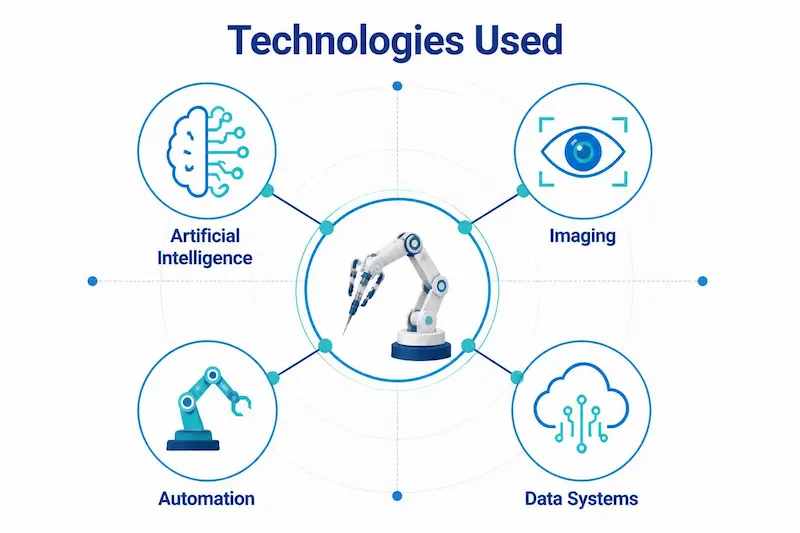
Computer Vision and Surgical Imaging
Computer vision helps robotic systems interpret what cameras and imaging devices capture in real time, analyzing tissues, instruments, and anatomy as the surgery happens. Combined with advanced surgical imaging, this gives surgeons clearer, more detailed views for minimally invasive procedures.
Robotic Automation and Motion Control
This is where steady hands become steadier. Robotic automation controls the movement of surgical arms and instruments, while motion control technology reduces errors and improves precision.
- Widely used in gallbladder removal, orthopedic surgery, and robotic prostatectomy
- Keeps movements stable even during long, complex procedures
Cloud Computing and Healthcare Data Systems
Cloud computing lets hospitals securely store and manage massive amounts of surgical and healthcare data, connecting operating rooms, imaging platforms, and hospital systems. It’s also the backbone making remote collaboration and tele-robotic surgery possible in the future.
Smart Surgical Software and Navigation Systems
Smart software ties everything together, coordinating robotic systems, imaging, and healthcare data during procedures, while navigation systems help surgeons track instruments and anatomy with precision. These platforms are shaping the next generation of autonomous surgical technology.
Most Common Robotic Surgery Procedures Using AI
Artificial intelligence and robotic surgery systems are now being used across multiple medical specialties to improve surgical precision, reduce complications, and support minimally invasive procedures.
Robotic Surgery Knee Replacement
Robotic surgery knee replacement procedures use AI-assisted orthopedic surgery systems and robotic joint replacement technologies to improve implant positioning and surgical accuracy. Smart surgical systems help surgeons analyze bone structure and guide movements during knee replacement operations. These technologies support better alignment and faster patient recovery after orthopedic procedures.
Robotic Surgery on Prostate and Urology Procedures
Robotic surgery on prostate procedures are among the most common applications of robot-assisted surgery in modern healthcare. Robotic prostatectomy systems help surgeons perform highly precise operations during prostate cancer treatment while reducing damage to surrounding tissues.
Robotic kidney surgery and other robotic surgery in urology procedures also use minimally invasive technologies to improve surgical precision and shorten recovery time for patients.
Robotic Surgery for Hysterectomy and Gynecology
Robotic hysterectomy procedures are widely used in women’s healthcare for conditions such as fibroids, endometriosis, and gynecologic cancers. These robotic surgery systems help surgeons perform delicate procedures through smaller incisions and advanced imaging guidance.
AI-assisted gynecologic surgery technologies improve movement precision and support safer minimally invasive surgical procedures in reproductive healthcare.
Robotic Surgery Gallbladder Removal and Hernia Repair
Robotic surgery for gallbladder removal and inguinal hernia repair procedures are becoming increasingly common in minimally invasive abdominal surgery. Robotic systems provide improved visualization and instrument flexibility during operations inside sensitive abdominal areas.
These smart surgical technologies help reduce surgical trauma, minimize blood loss, and support quicker healing after surgery.
Robotic Surgery Heart and Cardiac Procedures
Robot-assisted heart surgery uses advanced robotic healthcare technologies to perform highly precise cardiac operations. Procedures such as robotic mitral valve repair and minimally invasive cardiac surgery require excellent movement control and imaging precision.
AI-powered imaging and surgical navigation systems help surgeons operate more accurately during complex heart procedures while reducing the need for large chest incisions.
Robotic Surgery for Colon and Cancer Treatment
Robotic oncology surgery systems are increasingly used for procedures such as robotic surgery for colon cancer and AI-assisted tumor removal operations. These technologies support surgeons during delicate cancer procedures by improving visualization and movement accuracy.
Minimally invasive robotic cancer surgery may help reduce complications and support faster post-surgical recovery for patients.
Robotic Brain and Neurosurgery Procedures
AI neurosurgery systems and robotic brain tumor surgery technologies help surgeons perform highly delicate neurological procedures with improved precision. Smart neurological surgical technologies use advanced imaging analysis and robotic movement systems to support operations involving the brain and nervous system.
These procedures often require extremely accurate movements because they involve sensitive neurological structures.
Autonomous Surgical Robots and Future AI Surgery
Autonomous robotic surgery research is becoming an important area of healthcare innovation. Research organizations such as Johns Hopkins University are exploring surgical robots capable of performing certain tasks with limited human assistance.
Future smart surgical automation systems are expected to combine artificial intelligence, advanced imaging technologies, and robotic healthcare platforms to improve surgical precision and healthcare efficiency even further.
Applications of AI in Robotic Surgery and Smart Hospitals
Artificial intelligence is transforming how hospitals manage surgical procedures, operating rooms, healthcare imaging, and patient monitoring systems. Modern smart surgical systems are improving precision, workflow efficiency, and healthcare automation across multiple medical environments.
AI in Minimally Invasive Surgery
AI-assisted minimally invasive surgery helps surgeons perform procedures through smaller incisions using robotic surgery systems and advanced imaging technologies. These procedures often reduce pain, blood loss, infection risks, and patient recovery time after surgery.
AI in Surgical Imaging and Navigation
AI-powered imaging systems support real-time surgical visualization and navigation during medical procedures. Smart imaging technologies help surgeons analyze anatomical structures more accurately and improve movement precision during operations.
AI in Surgical Training and Simulation Systems
Healthcare institutions are increasingly using AI-based surgical training systems and simulation technologies to improve medical education. These platforms allow surgeons to practice robotic procedures in virtual environments before performing real operations.
AI in Smart Operating Rooms
Smart operating rooms combine robotic surgery systems, AI healthcare diagnostics, imaging technologies, and connected medical devices to improve workflow coordination during procedures. These systems support better communication and operational efficiency inside hospitals.
AI in Remote and Tele-Robotic Surgery
Remote robotic surgery technologies allow surgeons to control robotic systems from different locations using real-time communication networks and smart surgical platforms. Tele-robotic healthcare systems may improve access to advanced surgical care in remote regions.
AI in Hospital Surgical Workflow Management
Hospitals are using AI-powered workflow management systems to organize surgical scheduling, imaging analysis, patient monitoring, and healthcare data management more efficiently. These technologies help improve hospital operations and support faster healthcare decision-making.
Real-World Examples of AI Robotic Surgery Systems
Artificial intelligence and robotic surgery systems are already being used in hospitals, healthcare research centers, and advanced surgical institutions worldwide. These real-world robotic healthcare technologies are improving surgical precision, workflow efficiency, and minimally invasive medical procedures across multiple specialties.
da Vinci Surgical System
The da Vinci Surgical System is one of the most widely used robotic surgery systems in modern healthcare. The platform allows surgeons to perform highly precise minimally invasive procedures using robotic surgery arms, advanced imaging systems, and smart surgical controls.
The robotic surgery da Vinci platform is commonly used for prostate surgery, gynecologic procedures, cardiac surgery, and cancer treatment operations.
Advanced da Vinci Xi surgery technologies improve surgical visualization and support delicate procedures through high-definition 3D imaging and precision instrument control.
Mayo Clinic Robotic Surgery Research
Mayo Clinic is actively using minimally invasive robotic surgery systems for several complex medical procedures. Their healthcare research focuses on improving surgical precision, reducing recovery time, and enhancing patient safety through smart healthcare surgical systems.
The organization has highlighted how robot-assisted surgery supports smaller incisions, reduced complications, and improved recovery outcomes in modern healthcare environments.
Johns Hopkins Autonomous Surgery Research
Johns Hopkins University is researching autonomous robotic surgery innovations and AI-assisted surgical technologies. Their studies explore how smart surgical systems can perform certain surgical tasks with limited direct human control.
These research projects focus on improving surgical automation, robotic movement precision, and future healthcare applications involving autonomous surgical robots and intelligent operating systems.
Scientific Studies and Healthcare Research
Research published by Cureus highlighted the growing role of AI and surgical robotics in improving healthcare automation, surgical precision, and operating room efficiency.
Scientific studies continue exploring how artificial intelligence, robotic surgery systems, and smart healthcare technologies can improve patient outcomes and support future innovations in minimally invasive surgery and precision healthcare.
Advantages and Disadvantages of AI Robotic Surgery
Pros and cons of AI robotic surgery are described below:
Advantages
Following are the benefits of AI robotic surgery:
- Higher Surgical Precision
Advanced robotic surgery systems help surgeons perform highly accurate movements during delicate medical procedures. - Smaller Surgical Incisions
Minimally invasive robotic surgery uses smaller cuts, which may reduce pain and physical trauma after surgery. - Reduced Blood Loss During Operations
Precise robotic movements help reduce unnecessary tissue damage and blood loss during procedures. - Faster Recovery Time and Healing
Patients undergoing robot-assisted surgery often experience shorter hospital stays and quicker recovery periods. - Better Surgical Visualization Through 3D Imaging
High-definition 3D imaging systems improve visibility during operations and support more accurate surgical navigation. - Improved Workflow Efficiency in Hospitals
AI-assisted smart surgical systems help hospitals manage procedures, imaging analysis, and operating room coordination more effectively.
Disadvantages
Following are the limitations of robotic surgery:
- High Robotic Surgery Machine Cost
Installing and maintaining advanced robotic surgery systems can require major financial investment for healthcare institutions. - Technical Dependency During Procedures
Robotic surgery heavily depends on technology, software systems, and connected healthcare equipment during operations. - Complex Training Requirements for Surgeons
Healthcare professionals require specialized training to operate advanced robotic surgery platforms safely and effectively. - Risk of Robotic System Malfunction
Technical failures or software issues during surgery may affect operational safety and workflow management. - Limited Accessibility in Developing Healthcare Systems
Many hospitals in developing regions still face challenges related to infrastructure, technology costs, and access to advanced robotic healthcare systems.
AI Robotic Surgery vs Traditional Surgery
| Factor | AI Robotic Surgery | Traditional Surgery |
| Precision | Uses AI-assisted robotic accuracy and controlled instrument movement for delicate procedures | Depends mainly on manual hand control and surgeon movement |
| Incisions | Smaller surgical cuts used in minimally invasive surgery | Larger surgical openings are often required |
| Recovery Time | Faster healing and shorter hospital stays for many patients | Recovery period is usually longer after major procedures |
| Blood Loss | Lower blood loss during robotic-assisted operations | Higher risk of bleeding during open surgery |
| Visualization | Advanced 3D surgical imaging and real-time visualization technologies | Standard surgical viewing methods with limited digital assistance |
| Workflow | Uses smart surgical systems, imaging analysis, and robotic assistance technologies | Fully manual workflow with limited automation support. |
Conclusion
AI in robotic surgery and smart surgical systems is reshaping modern healthcare, improving precision, enabling minimally invasive procedures, and boosting efficiency across medical specialties.
As patient safety and faster recovery become top priorities, smart surgical systems help surgeons handle complex operations with greater control and fewer complications.
Looking ahead, autonomous surgical robots, AI-powered imaging, and remote robotic surgery will push this technology even further. For hospitals, adopting robot-assisted surgery means better workflow and stronger treatment outcomes, with human expertise still at the core of it all.
FAQs
1. What is AI robotic surgery?
AI robotic surgery uses robotic systems, artificial intelligence, and smart surgical technology to assist surgeons during procedures, improving precision, imaging analysis, and movement control.
2. How do robotic surgery systems work?
- Surgeons control robotic arms and instruments through a console
- AI-assisted software improves movement accuracy in real time
- Imaging technologies provide clear surgical visualization throughout the procedure
3. What are the benefits of robotic surgery?
Robot-assisted surgery offers smaller incisions, less blood loss, faster recovery, and shorter hospital stays, along with sharper precision and better visualization through advanced 3D imaging.
4. Is robotic surgery safer than traditional surgery?
In many procedures, yes. Robotic surgery can improve precision and lower certain risks compared to open surgery, though outcomes still depend on the surgeon’s experience and the type of procedure performed.
5. What technologies are used in smart surgical systems?
- Artificial intelligence and machine learning
- Deep learning and computer vision
- Robotic automation, surgical imaging, cloud computing, and smart navigation software






- Be Respectful
- Stay Relevant
- Stay Positive
- True Feedback
- Encourage Discussion
- Avoid Spamming
- No Fake News
- Don't Copy-Paste
- No Personal Attacks
- Be Respectful
- Stay Relevant
- Stay Positive
- True Feedback
- Encourage Discussion
- Avoid Spamming
- No Fake News
- Don't Copy-Paste
- No Personal Attacks
