How AI Is Changing Education in 2026: Future of Learning Explained
Published: 1 Jun 2026
School does not look the same anymore, and many people are asking what is really happening behind these changes. Students are using advanced digital tools every day, teachers are adjusting their teaching strategies, and classrooms are becoming more technology-driven than ever before. From smart boards to AI study assistants, the learning environment in 2026 feels very different from just a few years ago. It is natural to feel uncertain about whether this transformation is improving academic standards or making education more complicated.
If you are trying to understand how AI is changing education in 2026, this guide will break everything down in a clear and structured way. We will explore how AI in education is influencing personalized learning, online education platforms, automated grading, and classroom engagement. Instead of focusing on hype or fear, this article will give you step-by-step clarity about what is truly changing and what students must prepare for. By the end, you will have a practical understanding of the future of education and how to adapt confidently.
What Is Driving the Change in 2026?
Education is moving faster than ever in 2026. Schools are adopting smarter systems, expanding online education platforms, and shifting toward personalized learning. These changes clearly show how AI is changing education in 2026 across classrooms and digital environments. The transformation is not random. It is driven by practical needs for flexibility, efficiency, and better student outcomes.
Expansion of AI in Classrooms
Modern classrooms now use structured technology to improve teaching and learning. The expansion of AI in education allows teachers to manage lessons more effectively while keeping students engaged.
Following are the basic tools and knowledge areas driving this shift.
Smart Boards
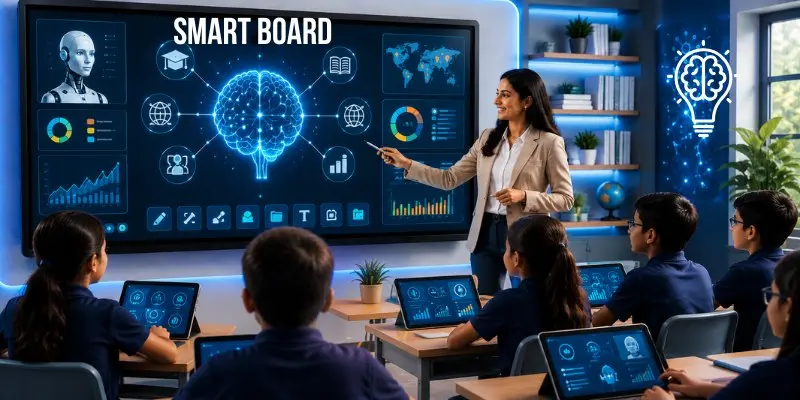
- Smart boards replace traditional blackboards with interactive digital displays.
- They allow teachers to present visual content, live examples, and real-time annotations, which improves classroom engagement.
AI Classroom Tools
- AI classroom tools track attendance, participation, and performance automatically.
- These systems help teachers focus more on instruction rather than routine management tasks.
Digital Lesson Systems
- Digital lesson systems organize content into structured modules within online education platforms.
- They make lesson delivery consistent and support personalized learning by adjusting materials based on student progress.
Growth of Online Education Platforms
The rise of online education platforms is another major factor shaping how AI is changing education in 2026. These systems expand access and create flexible learning opportunities.
Hybrid Learning Models
- Hybrid learning models combine in-person classes with digital learning sessions.
- Students benefit from structured guidance in school and flexible practice at home.
Remote Learning Improvements
- Remote learning tools now provide stable video sessions, interactive activities, and instant feedback.
- Improved technology keeps students connected and reduces learning gaps.
Global Classroom Access
- Online platforms connect students with teachers and courses worldwide.
- Global access increases educational opportunities and exposes learners to diverse perspectives.
Rising Demand for Personalized Learning
Students no longer learn at the same pace or in the same way. The demand for personalized learning continues to grow as schools recognize individual differences.
Adaptive Lesson Systems
- Adaptive lesson systems adjust content difficulty based on student responses.
- This approach supports stronger understanding and reduces frustration.
Student-Specific Learning Paths
- Student-specific learning paths allow learners to focus on their strengths and weaknesses.
- These customized paths increase motivation and academic confidence.
Performance-Based Adjustment
- Performance-based adjustment uses real-time data to refine lessons continuously.
- Teachers use these insights to guide students more effectively within AI in education environments.
Step-by-Step Breakdown of How AI Is Transforming Education in 2026
Education is not shifting all at once. Schools and universities are adopting new systems gradually, one layer at a time. These practical adjustments clearly show how AI is changing education in 2026 across classrooms, online education platforms, and hybrid models. Instead of replacing traditional methods completely, technology is reshaping how lessons are delivered, tracked, and improved. Let’s look at the real changes happening step by step and understand why each one matters.
Step 1 – Personalized Learning Becomes Standard
Personalized learning is no longer optional. It is becoming a normal part of modern classrooms and online education platforms.
AI Personalized Learning Systems
- AI personalized learning systems analyze student performance and adjust lesson difficulty automatically.
- These systems help teachers deliver targeted instruction within AI in education environments.
Self-Paced Learning
- Self-paced learning allows students to move forward only after mastering a concept.
- This approach reduces pressure and improves long-term understanding.
Real-Time Progress Tracking
- Real-time progress tracking monitors accuracy, speed, and engagement levels.
- Teachers use this data to guide instruction and strengthen personalized learning strategies.
Step 2 – AI Study Assistants Support Daily Learning
Students now use digital tools as part of their everyday study routine. These tools reshape learning habits and improve access to information.
AI Note-Taking Apps
- AI note-taking apps summarize lectures and organize key points clearly.
- They help students review material more efficiently.
Homework Help Tools
- Homework help tools provide step-by-step explanations for complex problems.
- These tools support independent learning while encouraging critical thinking.
Writing and Research Support
- Writing assistants improve grammar and structure in academic tasks.
- Research support tools help students evaluate sources and organize information responsibly.
Step 3 – Smart Classrooms Replace Traditional Setups
Traditional classroom models are evolving into technology-supported environments. This shift demonstrates the growing impact of AI in education systems.
Digital Boards
- Digital boards display interactive lessons and multimedia content.
- They make explanations clearer and increase classroom engagement.
Automated Attendance
- Automated attendance systems record student presence quickly and accurately.
- This reduces administrative work and improves efficiency.
AI Classroom Management
- AI classroom management tools monitor participation and assignment submission.
- These systems support teachers without replacing their leadership role.
Step 4 – Automated Grading and Instant Feedback
Assessment processes are becoming faster and more structured. These improvements strengthen the overall learning experience.
AI Grading Systems
- AI grading systems evaluate quizzes and structured assignments efficiently.
- Teachers save time and focus more on mentoring.
Instant Feedback Tools
- Instant feedback tools allow students to correct mistakes immediately.
- Quick responses improve understanding and reduce repeated errors.
Performance Dashboards
- Performance dashboards display academic trends and progress reports.
- These insights help teachers adjust instruction strategically.
Step 5 – AI Expands Access to Global Education
Education is no longer limited by location. Technology is opening doors for learners worldwide.
Virtual Tutoring Systems
- Virtual tutoring systems provide subject support beyond classroom hours.
- Students receive guidance whenever they need help.
Online Certifications
- Online certifications allow students to develop career-focused skills.
- These programs prepare learners for competitive job markets.
24/7 Learning Platforms
- 24/7 learning platforms give students access to resources at any time.
- Flexible access supports different learning schedules and time zones.
Key Benefits for Students in 2026
The transformation in classrooms is creating real advantages for learners. As AI in education becomes more structured and practical, students experience greater flexibility and support. These improvements clearly show how AI is changing education in 2026 in ways that directly affect academic growth and future readiness.
Following are the most important benefits that students experienced.
Flexible Learning Pace
Students no longer need to move at the same speed as the entire class.
- Self-paced learning allows them to spend more time on difficult topics.
- This approach supports personalized learning and reduces unnecessary pressure.
- Flexible pacing helps students build confidence and understand concepts more deeply.
Faster Feedback
Modern systems provide instant responses after quizzes and assignments.
- Faster feedback helps students correct mistakes quickly and improve performance.
- Immediate evaluation strengthens understanding and reduces repeated errors.
- Teachers can also use real-time insights to guide instruction more effectively.
Skill-Based Learning
Education in 2026 focuses more on practical skills rather than memorization.
- Students develop digital literacy, problem-solving ability, and research skills.
- Skill-based learning prepares them for modern workplaces influenced by technology.
- This shift reflects the broader impact of AI in education on curriculum design.
Better Career Preparation
Students now access career-oriented tools within online education platforms.
- AI-powered guidance systems recommend relevant courses and certifications.
- Exposure to technology-based learning builds familiarity with future job environments.
- Early preparation improves long-term career opportunities.
Increased Access to Global Resources
Technology connects students to worldwide educational content.
- Online education platforms provide access to international courses and expert instruction.
- Virtual tutoring systems remove geographical limitations.
- Global access expands knowledge beyond local classroom boundaries and strengthens academic growth.
Challenges Students Must Be Aware Of
While the benefits are clear, students must also understand the risks. The rapid growth of AI in education brings responsibility along with convenience. To fully understand how AI is changing education in 2026, learners need to recognize both the opportunities and the potential drawbacks. Being aware of these challenges helps students use technology wisely and protect their long-term development.
Overdependence on AI Tools
Relying too heavily on digital systems can weaken independent effort.
- Students may begin to depend on automated answers instead of solving problems themselves.
- Overdependence reduces self-discipline and long-term learning retention.
- Balanced use ensures technology supports learning rather than replaces thinking.
Reduced Critical Thinking
When students accept automated responses without analysis, critical thinking declines.
- Critical thinking skills are essential for evaluating complex ideas and solving real-world problems.
- Personalized learning works best when students actively engage with content.
- Strong reasoning ability remains a key human advantage in modern education.
Data Privacy Risks
Digital platforms collect large amounts of personal and academic information.
- Students must understand how their data is stored and protected.
- Weak privacy practices can expose sensitive information.
- Responsible use of online education platforms reduces security risks.
Academic Integrity Concerns
Easy access to automated tools may increase the temptation to bypass genuine effort.
- Submitting machine-generated work can harm academic growth.
- Schools are strengthening policies to protect fairness and credibility.
- Honest learning builds real competence and long-term success.
AI Misinformation
Not all automated outputs are accurate or reliable.
- Students must verify information before trusting it as factual.
- AI misinformation can spread incorrect data quickly.
- Strong research skills help learners evaluate content responsibly within AI in education systems.
Tips for Students to Prepare for AI-Driven Education
The education system is evolving quickly, and students must adapt with confidence. Understanding how AI is changing education in 2026 is not enough. Learners also need practical habits and skills to succeed in modern classrooms. Preparing early helps students use AI in education responsibly while protecting their long-term growth.
Develop Critical Thinking Skills
Strong reasoning skills help students analyze ideas instead of accepting answers blindly.
- Critical thinking allows learners to question information and explore multiple perspectives.
- In an environment shaped by personalized learning, active thinking remains essential.
Learn Basic AI Literacy
Students should understand how digital systems work at a basic level.
- AI literacy helps them use tools effectively without overdependence.
- Knowing the strengths and limits of technology supports smarter decision-making.
Verify Information Before Trusting It
Not all digital outputs are accurate or complete.
- Students must cross-check facts using reliable sources.
- Careful verification protects them from misinformation within online education platforms.
Use AI as a Support Tool
Technology should assist learning, not replace effort.
- Students should attempt problems independently before using automated help.
- Balanced use ensures that tools enhance skills rather than weaken them.
Focus on Creativity and Emotional Intelligence
Human strengths remain valuable in 2026 and beyond.
- Creativity helps students generate original ideas that machines cannot replicate.
- Emotional intelligence supports teamwork, leadership, and communication in both academic and professional settings.
By developing these habits, students can thrive in a system shaped by AI in education while maintaining independence and intellectual growth.
Common Mistakes Students and Schools Should Avoid
As AI in education becomes more integrated into classrooms and online education platforms, careful implementation becomes essential. Understanding how AI is changing education in 2026 also means recognizing what should not be done. Avoiding these common mistakes helps students and institutions maintain balance, integrity, and long-term learning quality.
Relying Completely on Automation
Automation improves efficiency, but complete reliance weakens learning discipline.
- Students may skip foundational practice if they depend entirely on automated solutions.
- Schools should treat digital systems as support tools rather than replacements for structured teaching.
Ignoring Ethical Guidelines
Ethical standards protect fairness and credibility in education.
- Clear policies help prevent misuse of digital tools and protect academic integrity.
- Schools must establish responsible guidelines for technology use in classrooms.
Using AI Without Supervision
Unsupervised use can lead to misinformation or poor learning habits.
- Teachers should monitor how students use personalized learning systems.
- Proper guidance ensures that technology strengthens understanding instead of creating shortcuts.
Replacing Human Interaction
Education depends heavily on communication and mentorship.
- Removing teacher-student interaction can reduce motivation and engagement.
- Even in digital environments, human leadership remains essential for growth.
Neglecting Digital Responsibility
Students must learn responsible behavior in technology-driven environments.
- Understanding data privacy, online safety, and academic honesty is critical.
- Responsible use supports the healthy development of AI in education without harming trust or standards.
Avoiding these mistakes allows schools to benefit from innovation while protecting the human foundation of learning.
What the Future Holds Beyond 2026
Education will continue evolving after 2026. The systems introduced today are only the foundation for more advanced learning environments. Understanding how AI is changing education in 2026 helps us see where schools are heading next. The future will likely focus on balance, smarter systems, and stronger policies that protect both innovation and human leadership.
Hybrid Human + AI Learning Models
Future classrooms will combine teacher guidance with structured digital support.
- Hybrid models will blend in-person instruction with intelligent online education platforms.
- Teachers will mentor and interpret insights while technology handles data and routine tasks.
- This balance ensures that human interaction remains central in AI in education systems.
Smarter Education Analytics
Data tracking will become more precise and predictive.
- Smarter analytics will identify learning gaps before they become serious problems.
- Schools will use performance insights to improve personalized learning strategies.
- These systems will support better academic planning without removing teacher judgment.
AI-Supported Career Planning
Career preparation will become more structured and data-informed.
- AI tools will recommend courses, certifications, and skill pathways aligned with job market trends.
- Students will receive guidance based on strengths and interests.
- This approach strengthens long-term readiness in a technology-driven economy.
Stronger Education Policies
As technology expands, regulation will also grow.
- Governments and institutions will develop clearer ethical guidelines and privacy standards.
- Policies will ensure fair use, data protection, and responsible implementation.
- Strong governance will support sustainable growth in AI in education beyond 2026.
The future points toward collaboration rather than replacement, where structured systems enhance learning while educators remain essential to student development.
Conclusion
Now , you clearly understand how AI is changing education in 2026 and what those changes mean for students, teachers, and schools. We explored the major shifts happening in classrooms, the rise of online education platforms, the growth of personalized learning, and the new skills students must develop. You also learned about the benefits, the risks, and the common mistakes to avoid. Most importantly, you now see that technology is reshaping education step by step, not replacing it completely.
The key is balanced adoption. Use modern tools to improve efficiency and expand learning opportunities, but never let them replace effort, discipline, or human interaction. Responsible learning means thinking critically, verifying information, and using technology as support rather than a shortcut.
As you move forward, focus on strengthening your critical thinking, creativity, and digital responsibility. Explore new learning platforms wisely, practice independent problem-solving, and stay open to change. The future of education will continue to evolve beyond 2026, and those who adapt thoughtfully will succeed. Keep learning, stay curious, and prepare confidently for what comes next.
Frequently Asked Questions (FAQs)
1. How is AI changing education in 2026 in simple terms?
In 2026, classrooms are using smarter digital tools to support teaching and learning. Lessons are becoming more personalized, and students receive feedback faster than before. Schools are also using data to track progress and improve results. Overall, learning is becoming more flexible and technology-supported.
2. Is AI replacing teachers in schools?
No, teachers are still essential in education. Technology helps with grading, organization, and lesson support, but it cannot replace mentorship and human guidance. Teachers motivate students, manage classrooms, and build strong learning environments. The future focuses on cooperation, not replacement.
3. How can students prepare for AI-driven education?
Students should develop strong critical thinking and problem-solving skills. Learning how to use digital tools responsibly is also important. It helps to verify information instead of trusting everything automatically. Balanced use of technology builds confidence and independence.
4. What are the biggest benefits of AI in education?
AI makes learning more flexible and personalized. Students can move at their own pace and receive quick feedback. It also improves access to global courses and tutoring support. These changes help students strengthen their academic performance.
5. Are there risks students should be aware of?
Yes, overdependence on technology can reduce independent thinking. Privacy and data security are also important concerns. Students must use tools responsibly and avoid academic shortcuts. Awareness helps prevent misuse and protects long-term growth.
6. Will education look very different after 2026?
Education will continue evolving step by step. Hybrid models that combine classroom teaching and digital systems will likely become more common. Schools may use smarter tracking and career guidance tools. However, human teachers will remain central to the learning process.
7. Should parents be concerned about AI in schools?
Parents should stay informed rather than worried. Technology can improve learning when used responsibly. Monitoring usage and encouraging critical thinking helps children benefit safely. Open communication between schools and families is important for balanced progress.






- Be Respectful
- Stay Relevant
- Stay Positive
- True Feedback
- Encourage Discussion
- Avoid Spamming
- No Fake News
- Don't Copy-Paste
- No Personal Attacks
- Be Respectful
- Stay Relevant
- Stay Positive
- True Feedback
- Encourage Discussion
- Avoid Spamming
- No Fake News
- Don't Copy-Paste
- No Personal Attacks
