Can AI Replace Teachers? The Truth About Machine vs Human Learning
Published: 1 Jun 2026
Will teachers eventually lose their place in the classroom, or is this fear driven by rapid change? Many parents feel uncertain about their children learning through screens instead of real mentors. Educators worry about job security as digital systems become more common in schools. Students feel overwhelmed by new tools and unclear expectations. The growing debate around Can AI replace teachers reflects these real concerns.
In this guide, we will carefully examine what technology can genuinely accomplish and where its limits begin. We will explore how online education platforms are evolving, how personalized systems influence learning, and how human teachers compare to automated tools. You will understand the strengths, the weaknesses, and the long term impact on classrooms. By the end, you will have a clear, practical perspective grounded in reality rather than fear.
The Growing Debate Around AI Replacing Teachers
The question “Can AI replace teachers?” represents a broader debate about the future of education in a rapidly changing world. As AI in education continues to expand, many schools are adopting advanced tools across online education platforms and digital classrooms. This shift has intensified discussions around AI replacing teachers and the long term role of human educators. Parents worry about learning quality, teachers question job security, and students face a new model of instruction that blends technology with traditional methods.
At the center of this debate is the comparison between machine vs human learning. Digital systems can support personalized learning and automate routine tasks, but teaching also involves emotional intelligence, mentorship, and classroom leadership. The conversation goes beyond efficiency and explores the deeper impact on academic standards and student development. In this article, we will examine the real capabilities of AI in education, the limitations of automated systems, and whether replacement is realistic or simply a misunderstanding of how modern classrooms are evolving.
Online education platforms are growing quickly, and many institutions now rely on advanced digital systems to support instruction. These tools handle structured lessons, student tracking, and performance monitoring with speed and accuracy. This progress has raised an important question about whether technology can fully take over teaching responsibilities. To answer it properly, we must examine both the capabilities and the limitations of these systems in real classroom environments.
Role of AI Tools in Digital Classrooms
The future is collaboration, not replacement
In digital classrooms, intelligent systems support teachers by organizing course materials and monitoring student progress. They help manage assignments, track attendance, and generate performance reports. These tools improve efficiency and make virtual learning more structured. However, they operate within programmed frameworks and depend on predefined rules.
Automation of Grading, Lesson Delivery, and Feedback
One of the strongest advantages of these tools is automation. They can grade objective assessments quickly and provide instant responses to students. Lesson delivery can also follow a consistent format across large groups. This reduces workload for educators and ensures timely feedback, especially in online settings.
Strengths of AI in Structured Online Education
Structured online education benefits from consistency and data organization. Digital systems deliver content without fatigue and maintain uniform standards across sessions. They can analyze learning patterns and adjust exercises accordingly. This makes them effective for repetition, practice, and standardized instruction.
Limitations in Emotional Intelligence and Mentorship
Despite technical strengths, digital systems lack emotional awareness and personal judgment. They cannot sense frustration, motivation shifts, or social challenges within a classroom. Mentorship requires empathy, encouragement, and real time understanding of student behavior. These qualities remain uniquely human and essential to meaningful learning.
Why AI Replacing Teachers Is Unlikely in Full Form
While automation improves efficiency, complete replacement is unrealistic. Teaching involves guidance, inspiration, discipline, and relationship building. Students learn not only from information but also from interaction and leadership. Technology can support education, but the human presence in classrooms remains irreplaceable.
What Tools Are Used for Teachers and Students?
Digital platforms now support both instruction and learning across online education platforms. These systems improve structure, performance tracking, and engagement in modern classrooms. Understanding the tools used by teachers and students helps clarify whether AI replacing teachers is realistic or simply misunderstood.
Following are the list of tools used by teachers and students:
Tools Commonly Used by Teachers
Educators rely on digital systems to manage courses, monitor performance, and simplify evaluation. These tools strengthen AI in education by improving organization and efficiency while keeping teachers in control of instruction.
- Google Classroom helps teachers organize assignments and communicate with students efficiently in digital classrooms.
- Microsoft Teams for Education supports structured lesson delivery and collaboration in virtual learning environments.
- Moodle enables institutions to build organized online courses with built-in grading and tracking features.
- Turnitin maintains academic integrity by checking originality and reducing plagiarism risks.
- Gradescope improves automated grading accuracy and saves valuable time for instructors.
- Kahoot increases classroom engagement through interactive quizzes and live participation.
- Canva for Education assists teachers in designing visually engaging instructional materials.
These tools enhance productivity, but they function as support systems rather than replacements for human teachers.
Tools Commonly Used by Students
Students use digital learning platforms to strengthen independent study and improve personalized learning outcomes. These systems are part of the broader machine vs human learning discussion, where structure meets guidance.
- Khan Academy provides structured lessons that support AI personalized learning in mathematics and science.
- Duolingo improves language skills through interactive exercises and consistent practice.
- Quizlet supports exam preparation through memory-based study methods.
- Coursera offers structured online courses that expand learning beyond traditional classrooms.
- Photomath explains problem-solving steps clearly, helping students understand concepts deeply.
- Grammarly improves writing clarity and grammar in academic tasks.
- Notion strengthens organization and study planning for better academic management.
These platforms support students, but mentorship and emotional guidance remain human strengths.
Shared Platforms Used by Teachers and Students
Some systems connect educators and learners within one environment. These shared tools demonstrate how AI in online education platforms supports collaboration without eliminating teacher involvement.
- Zoom enables live sessions and real-time communication in virtual classrooms.
- Google Meet provides structured online class interaction within educational ecosystems.
- Blackboard manages course delivery and academic tracking at institutional levels.
- Edmodo strengthens classroom communication and assignment coordination.
- Nearpod supports interactive lesson participation and student feedback collection.
- Schoology integrates course organization with communication tools for digital learning.
These platforms show that technology improves efficiency, yet the human element in teaching remains essential.
Main Advantages of AI Tools for Educators
The expansion of AI in education has reshaped how teachers manage instruction, assessment, and classroom organization. Many institutions now integrate structured digital systems within online education platforms to improve efficiency and academic planning. These tools are designed to support educators, not replace them. Below are the key advantages that demonstrate how technology strengthens teaching practice.
Time Efficiency Through Automated Grading
Automated grading systems evaluate quizzes, assignments, and objective tests quickly and accurately. This reduces repetitive correction tasks and allows teachers to dedicate more time to instruction. In discussions about AI replacing teachers, automation clearly supports efficiency rather than eliminating human involvement.
Lesson Planning Support
Digital planning platforms assist educators in organizing structured lessons and aligning them with curriculum goals. These systems recommend activities and learning paths based on subject requirements. Within AI in online education platforms, lesson consistency becomes easier to maintain while preserving teacher creativity.
Classroom Analytics and Student Tracking
Classroom analytics tools provide structured reports on attendance, engagement, and academic progress. Teachers can identify performance gaps early and adjust strategies accordingly. This data-driven approach supports personalized learning while maintaining human judgment and oversight.
Reduced Administrative Workload
Administrative tasks often limit instructional time. AI tools for educators help manage attendance records, documentation, and reporting efficiently. By reducing routine paperwork, teachers can focus more on mentorship and classroom interaction.
Improved Instructional Planning
Access to performance insights improves long-term instructional planning. Machine vs human learning comparisons show that while machines process information efficiently, teachers interpret trends and adapt teaching strategies effectively. This collaboration enhances academic outcomes and supports continuous improvement in education.
How AI Enhances Personalized Learning for Students
Personalized learning has become one of the strongest developments in modern education. Instead of following a single teaching pace for everyone, digital systems now adjust instruction based on individual performance. This approach improves understanding and supports students with different learning needs.
The following are the key elements that make personalized learning more effective:
AI Personalized Learning Systems
AI personalized learning systems analyze student performance patterns and recommend tailored content. They identify strengths and weaknesses through continuous assessment. This allows students to focus on topics that need improvement rather than repeating material they already understand.
Adaptive Lesson Adjustments
Adaptive lesson adjustments modify difficulty levels based on real-time responses. If a student struggles with a concept, the system provides additional practice and simplified explanations. If performance improves, it gradually increases complexity to maintain challenge and engagement.
Data-Driven Student Progress Tracking
Data-driven student progress tracking monitors accuracy, completion rates, and learning speed. Teachers receive structured reports that highlight areas of concern. This helps educators make informed decisions and intervene early when necessary.
Benefits for Struggling Learners
Personalized systems provide extra support to students who need more time to grasp concepts. They allow repeated practice without embarrassment or classroom pressure. This builds confidence and encourages consistent improvement.
Role of Teachers in Guiding Personalized Systems
Although digital systems manage structured learning paths, teachers interpret results and provide deeper explanations. They adjust teaching strategies based on classroom behavior and emotional cues. Personalized learning becomes most effective when educators guide and supervise the process.
Machine Learning Systems vs Traditional Teachers in Personalized Learning
Personalized learning has improved with the help of digital systems, but it has also raised important comparisons. Many people now examine machine vs human learning to understand which approach delivers better results. While technology offers structure and speed, traditional teachers bring experience and emotional awareness. The real discussion focuses on how both methods differ and where each one performs best.
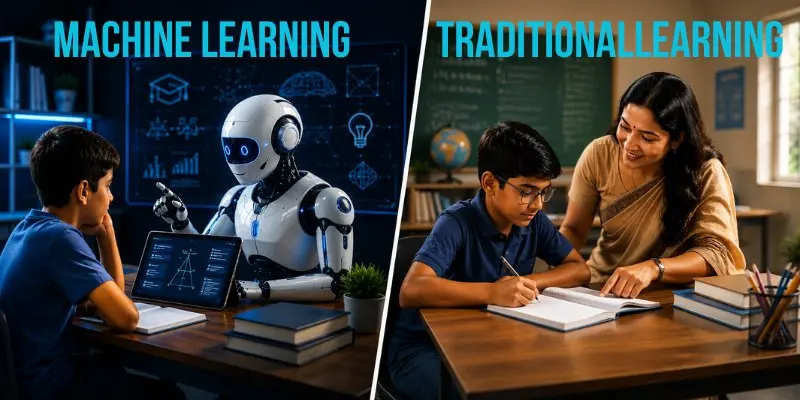
Machine Efficiency vs Human Judgment
Machine learning systems process large amounts of student data quickly and generate structured learning paths. They respond instantly and maintain organized progress tracking. Traditional teachers, however, apply professional judgment when adjusting instruction. They consider classroom behavior, motivation levels, and individual personality traits before making decisions.
Data Analysis vs Emotional Understanding
Digital systems rely on data analysis to identify strengths and weaknesses. They measure accuracy, response time, and completion rates with precision. Teachers go beyond numbers by recognizing frustration, confidence shifts, and personal challenges. Emotional understanding allows educators to provide encouragement that software cannot replicate.
Consistency vs Adaptability
Machine-driven instruction delivers consistent lessons without fatigue or variation. It follows programmed guidelines and maintains uniform standards. Human teachers adapt teaching styles based on classroom energy, discussion flow, and unexpected questions. This adaptability supports deeper learning and creative thinking.
Balanced Hybrid Teaching Model
The most effective approach combines structured technology with human leadership. A balanced hybrid teaching model allows machine learning systems to manage data and routine tasks while teachers focus on mentorship and guidance. This partnership strengthens personalized learning without removing the essential role of educators.
Human Teacher Roles vs AI Assistant Functions
The debate around AI replacing teachers often ignores a key difference between automation and human leadership. While digital systems support instruction and organization, teaching involves far more than delivering information. Understanding the distinction between human teacher roles and AI assistant functions helps clarify why complete replacement is unlikely.
Mentorship and Motivation
Human teachers guide students beyond academic content. They encourage effort, build confidence, and respond to personal challenges. Motivation often depends on empathy and understanding, qualities that structured systems cannot genuinely provide.
Emotional Intelligence in Teaching
Teaching requires awareness of student emotions, classroom mood, and social dynamics. Educators recognize signs of frustration, anxiety, or disengagement and adjust their approach accordingly. Emotional intelligence strengthens learning outcomes in ways that data alone cannot measure.
Discipline and Classroom Management
Effective classroom management involves authority, fairness, and relationship building. Teachers maintain order, resolve conflicts, and create a respectful learning environment. Digital tools may assist with tracking behavior, but leadership and discipline remain human responsibilities.
Social Development and Character Building
Education shapes values, communication skills, and teamwork. Teachers model behavior, promote collaboration, and encourage ethical thinking. These aspects of development require human interaction and cannot be fully replicated by automated systems.
AI Assistant Functions in Education
AI assistant functions focus on grading, progress tracking, lesson organization, and structured feedback. They improve efficiency and support personalized learning within AI in education environments. However, these systems operate as tools within a broader educational framework rather than independent instructors.
The comparison between machine vs human learning shows that technology enhances efficiency, but teaching remains a deeply human profession grounded in connection and mentorship.
Can AI Software Improve Classroom Engagement More Than Human Instructors?
Engagement is one of the strongest indicators of learning success. With the rapid growth of AI in education, many schools are testing whether digital systems can increase participation more effectively than traditional teaching. Online education platforms now offer structured tools that measure attention, responses, and activity levels. However, true engagement involves focus, curiosity, and emotional connection, not just interaction metrics.
Gamified Learning Systems
Gamified learning systems use points, levels, and rewards to motivate students. These features make lessons feel competitive and enjoyable, especially in structured subjects. Within online education platforms, gamification keeps learners active and encourages consistent participation. It increases short-term motivation but does not always guarantee deep understanding.
Interactive Digital Platforms
Interactive digital platforms allow students to answer live questions, complete quizzes, and join virtual activities. These systems support personalized learning by adjusting tasks according to performance. Structured participation improves attention and keeps students involved throughout the lesson. Still, interaction alone does not replace meaningful classroom dialogue.
Instant Feedback Systems
Instant feedback systems provide immediate corrections and performance insights. Students can quickly identify mistakes and improve accuracy. In discussions about AI replacing teachers, this speed is often highlighted as a strength. However, feedback without explanation or encouragement may limit deeper comprehension.
Human-Driven Discussion and Inspiration
Human instructors encourage critical thinking through open discussions and real-time debate. They respond to student expressions, questions, and emotions in ways structured systems cannot replicate. The comparison of machine vs human learning shows that inspiration and trust strongly influence engagement. Students often feel more motivated when guided by a teacher who understands their challenges.
Engagement Through Personality and Leadership
Classroom engagement also depends on personality, confidence, and leadership. Teachers build a sense of community that encourages collaboration and participation. While technology improves structure and efficiency, it cannot fully replace the human presence that shapes classroom culture. The most effective engagement occurs when digital tools support strong human leadership rather than compete with it.
Ethical Considerations for Integrating AI into School Curricula
As AI in education becomes more common, schools must carefully examine the ethical risks involved. Technology can improve efficiency and support learning, but it also introduces concerns that affect students, teachers, and institutions. When discussing AI replacing teachers, it is important to consider not only performance but also responsibility and fairness. Ethical planning ensures that innovation strengthens education rather than creating new problems.
Data Privacy Concerns
Digital learning systems collect large amounts of student information, including performance data and personal details. Protecting this data is essential to maintain trust and security. Schools must ensure that online education platforms follow strict privacy standards. Without proper safeguards, sensitive information could be misused or exposed.
Academic Integrity Challenges
The use of automated systems can increase risks related to plagiarism and unfair assistance. Students may rely too heavily on digital tools instead of developing independent thinking skills. Maintaining academic honesty becomes more complex when structured systems provide ready-made solutions. Institutions must establish clear guidelines to preserve integrity.
Algorithm Bias Risks
Algorithm bias occurs when digital systems reflect unfair patterns present in the data used to build them. This can affect grading, recommendations, or performance evaluation. In debates about machine vs human learning, fairness becomes a central concern. Educators must monitor systems to prevent discrimination or unequal treatment.
Responsible Policy Implementation
Schools need well-defined policies before integrating advanced tools into classrooms. Clear frameworks should outline acceptable use, data handling, and accountability measures. Responsible policy implementation ensures that technology supports teachers rather than replacing professional judgment.
Supervision and Regulation
Continuous supervision is necessary to maintain ethical standards. Teachers and administrators should regularly review how systems influence student outcomes. Regulation at institutional and national levels strengthens transparency and accountability. With proper oversight, AI in education can be integrated responsibly while protecting academic values.
Best AI-Powered Tutoring Services for Students
The demand for structured digital tutoring has increased across the world. Many students now rely on AI tutoring services to improve academic performance and prepare for competitive exams. With the rapid growth of AI in online education platforms, learners can access subject-specific guidance anytime and from anywhere. Choosing the right platform requires careful evaluation of quality, credibility, and curriculum relevance.
Global Tutoring Platforms
Several international platforms provide adaptive learning systems designed to support personalized learning. These services analyze student performance and adjust lessons according to strengths and weaknesses. Many offer structured programs in mathematics, science, and language development. Access to global tutoring platforms expands opportunities beyond traditional classroom limitations.
Emerging EdTech Developments
The education technology sector continues to introduce innovative tutoring solutions worldwide. New platforms combine structured coursework with performance tracking and skill-based assessments. These systems aim to improve learning efficiency while maintaining academic standards. Growth in digital education reflects the broader expansion of AI in education.
Online AI Learning Tools
Online learning tools provide step-by-step explanations, guided exercises, and instant progress evaluation. Many platforms integrate machine vs human learning models by combining structured automation with teacher supervision. Students benefit from flexible schedules and targeted practice. These tools strengthen independent study while maintaining instructional structure.
Safety and Credibility Evaluation
Before selecting any tutoring service, students and parents should examine privacy policies and data protection standards. Reliable platforms clearly explain how they manage information and maintain transparency. Evaluating user reviews and institutional partnerships helps ensure credibility. Responsible use is essential in modern AI in online education platforms.
Curriculum Alignment Importance
Effective tutoring services must align with recognized curriculum standards. Platforms that match academic frameworks improve consistency and learning outcomes. Proper alignment ensures that AI tutoring services complement classroom instruction rather than create confusion. Curriculum-focused selection supports long-term academic development.
Where to Find AI-Driven Educational Apps
The availability of digital learning tools has expanded rapidly in recent years. Students and educators can now access AI-driven educational apps through trusted global platforms and verified marketplaces. These apps support AI in education by offering structured lessons, adaptive exercises, and performance tracking. Choosing reliable sources ensures both quality learning and data safety.
Major App Stores
Most educational apps are available on the Apple App Store and Google Play Store. These platforms allow users to review ratings, feedback, and privacy policies before downloading. They provide access to thousands of subject-based tools that support personalized learning and skill development.
Online Learning Platforms
Web-based platforms such as Khan Academy, Duolingo, Coursera, and Quizlet offer structured learning programs across multiple subjects. These services integrate adaptive systems that align with modern online education platforms. Many provide free and paid options depending on course depth and certification needs.
Institutional Learning Portals
Many schools and universities provide access to apps through official learning management systems like Moodle, Blackboard, or Google Classroom. These systems integrate structured content, assignments, and assessment tools within a secure academic environment. Access through institutional portals ensures curriculum alignment and proper supervision.
Educational Technology Marketplaces
Specialized education technology directories and review sites help educators compare platforms. These marketplaces evaluate functionality, data protection standards, and instructional value. Reviewing independent evaluations reduces the risk of unreliable applications.
Safety and Credibility Considerations
Before using any digital app, users should verify data privacy policies and platform credibility. Transparent platforms clearly explain how information is stored and protected. Responsible selection strengthens the role of AI in education without compromising academic standards.
Future Impact of Machine Learning on Traditional Teaching Methods
Education is entering a period of steady transformation. The growth of machine learning in education is influencing lesson design, assessment strategies, and classroom structure. As discussions around AI replacing teachers continue, schools are focusing more on integration than substitution. The future of AI in education depends on how well institutions balance innovation with human leadership.
Evolution of Classroom Models
Traditional lecture-based classrooms are evolving into interactive environments supported by structured technology. Many institutions now use AI tools for education to monitor participation and adjust learning pathways. Digital dashboards and analytics help track progress in real time. These changes reflect a shift toward more data-informed instruction without removing teacher involvement.
Hybrid Education Systems
Hybrid models combine physical instruction with online education platforms that provide structured resources and practice exercises. Students benefit from personalized learning paths while still receiving direct guidance from educators. This blended approach improves flexibility and accessibility. Hybrid systems show that technology strengthens teaching rather than replaces it.
Changing Teacher Responsibilities
Teacher responsibilities are expanding beyond content delivery. Educators now interpret insights generated through AI driven analytics and guide students in using digital systems responsibly. In comparisons of machine vs human learning, teachers remain responsible for mentorship, evaluation, and classroom culture. Technology handles routine processes while educators focus on deeper learning development.
Long-Term Transformation of Education
Institutions will refine how they integrate structured digital systems into academic planning. Curriculum design, assessment models, and performance tracking will increasingly rely on analytical tools. At the same time, human interaction will continue shaping communication skills and ethical thinking. This transformation reflects evolution rather than disruption.
Realistic Future Outlook
A realistic outlook suggests that complete replacement of teachers is not possible. While automation enhances efficiency and supports structured learning, it cannot substitute leadership and emotional guidance. The future of education lies in collaboration, where AI in education improves organization and personalization while teachers remain central to student growth.
Conclusion
In this article, we explored the real debate around Can AI replace teachers and examined every major angle of the discussion. We looked at how digital tools support online education platforms, how personalized learning works, and how machine vs human learning compares in real classrooms. We also discussed teacher roles, classroom engagement, ethical concerns, tutoring services, and the future impact of machine learning on traditional teaching methods. The evidence shows that while technology improves efficiency and structure, the human role in education remains central.
My personal recommendation is simple, use these tools wisely but never ignore the value of human guidance. Education is not only about information delivery. It is about mentorship, discipline, emotional support, and leadership. Schools should adopt innovation carefully while protecting the human connection that shapes long term growth.
If you found this guide helpful, stay informed and keep learning, buddies.
Frequently Asked Questions
1. Can AI replace teachers in the future?
AI can support teaching, but it cannot fully replace human educators. Teachers provide emotional guidance, mentorship, and classroom leadership. Technology handles structured tasks well, but education requires human understanding. The future is more about collaboration than replacement.
2. What is the purpose of school beyond academic learning?
School is not only about learning subjects. It builds discipline, communication skills, teamwork, and character. Students learn social responsibility and develop confidence. Human interaction plays a major role in this growth.
3. What are the pros of AI in the classroom?
AI in the classroom improves efficiency and supports personalized learning. It provides instant feedback and helps track student progress. Teachers can save time on grading and focus more on instruction. It also increases access to learning resources.
4. What are the cons of AI in the classroom?
Overreliance on technology may reduce critical thinking and independent effort. Data privacy and academic integrity can become concerns. Digital systems lack emotional understanding and personal judgment. Without supervision, misuse can affect learning quality.
5. How does AI support teachers instead of replacing them?
AI helps teachers manage routine tasks like grading and progress tracking. It provides structured data that improves lesson planning. This allows educators to focus more on mentoring and student engagement. The human role remains essential.
6. Can AI improve classroom engagement more than teachers?
AI tools can increase participation through interactive activities and instant feedback. However, real engagement often depends on motivation and inspiration. Teachers create trust and connection in the classroom. Technology supports engagement but does not replace leadership.
7. What does the future hold for AI and human educators?
The future points toward hybrid education models. Technology will handle structured processes while teachers guide learning and development. Schools will likely combine digital efficiency with human mentorship. Balanced integration will shape modern education.
8. Is AI better than human teachers?
AI is efficient in data processing and structured instruction. Human teachers are stronger in empathy, creativity, and adaptability. Both have strengths in different areas. Education works best when they complement each other.


- Be Respectful
- Stay Relevant
- Stay Positive
- True Feedback
- Encourage Discussion
- Avoid Spamming
- No Fake News
- Don't Copy-Paste
- No Personal Attacks
- Be Respectful
- Stay Relevant
- Stay Positive
- True Feedback
- Encourage Discussion
- Avoid Spamming
- No Fake News
- Don't Copy-Paste
- No Personal Attacks
