AI-Powered Agriculture Robots and Autonomous Tractors in Modern Farming
Published: 18 Sep 2026
Skilled farm workers are getting harder to find, while fuel, equipment, and production costs keep climbing. So how do farmers feed a growing world with fewer hands and tighter budgets?
That’s where AI-powered agriculture robots and autonomous tractors come in. From robotic harvesting to self-driving machinery, smart farming automation is helping farmers work faster, cut delays, and manage fields with more precision and far less manual effort.
In this guide, you’ll learn how these systems work, the technologies behind them, real-world applications, key benefits, challenges, and what the future holds for modern farming.
What Are Agriculture Robots and Autonomous Tractors?
Agriculture robots are smart machines that handle farming tasks like planting, spraying, harvesting, crop monitoring, and weed control with minimal human effort. Autonomous tractors, also called driverless tractors, use GPS, sensors, and digital controls to move through fields on planned routes without a driver on board.
Together, AI-powered agriculture robots make farming more productive, precise, and data-driven while reducing labor dependency.
Role of Artificial Intelligence in Agricultural Robotics
- Analyzes data from sensors, cameras, and GPS to improve accuracy
- Identifies crops, detects obstacles, and monitors plant health
- Adjusts machine performance automatically and improves as more data is collected
How Autonomous Tractors Operate
- Farmers program routes and tasks through digital platforms before operations begin
- The tractor follows its route independently, keeping precise direction and speed
- Obstacle detection allows automatic movement adjustments in the field
Importance of Smart Farming Automation
- Reduces manual labor and speeds up farming tasks
- Improves precision and consistency in planting, spraying, and harvesting
- Cuts operational errors and helps farmers manage resources more effectively
Why Agricultural Robotics Is Important
Labor shortages, rising costs, and growing food demand are putting modern farms under serious pressure. Many farming tasks need long hours and heavy physical effort, which makes it hard to stay productive with limited workers.
Agricultural robotics helps solve this. AI-powered agriculture robots work with greater accuracy and consistency than traditional methods, helping farmers save time, reduce waste, and boost productivity as precision farming and smart farming automation continue to grow.
Impact of Labor Challenges
- Labor shortages hit hardest during planting and harvesting seasons
- Skilled workers for demanding, repetitive tasks are harder and costlier to find
- Agriculture robots automate field operations and keep farms productive
Importance of Precision and Efficiency
- Autonomous tractors and robotics improve accuracy in planting, spraying, irrigation, and harvesting
- Less waste and better crop quality
- Smarter use of limited farming resources
Role in Sustainable Farming
- Cuts unnecessary use of fuel, water, fertilizers, and pesticides
- Applies resources precisely based on crop and soil conditions
- Lowers environmental impact while supporting long-term productivity
How AI-Powered Agriculture Robots and Smart Farming Technologies Work
Modern agriculture robots combine automation, digital monitoring, and intelligent control systems to handle farming tasks with greater precision. These technologies help farmers manage crops, monitor field conditions, and complete operations faster with less physical effort. By using connected systems and real-time information, robotic farming equipment improves productivity and supports more efficient agricultural management.
Artificial Intelligence and Machine Learning in Agricultural Robotics
Artificial intelligence allows agricultural machines to process information collected from fields and make accurate operational decisions. Machine learning systems study crop conditions, soil patterns, and environmental changes to improve performance over time. As more field data becomes available, farming AI robots become better at handling complex agricultural tasks under different conditions.
These intelligent systems help improve planting accuracy, spraying control, crop monitoring, and resource management. They also support faster decision making during large-scale farming operations.
Sensor and Camera Systems for Real-Time Monitoring
Agricultural robotics systems use sensors and digital cameras to observe field conditions continuously. These devices collect information related to crop growth, soil condition, temperature, and surrounding movement inside the field. Agriculture monitoring robot technologies can identify unhealthy plants, detect weeds, and monitor crop development with high accuracy.
Computer vision systems help machines understand visual information and respond appropriately during field operations. This improves operational safety and allows robots to work more efficiently in changing agricultural environments.
GPS and Autonomous Navigation Systems
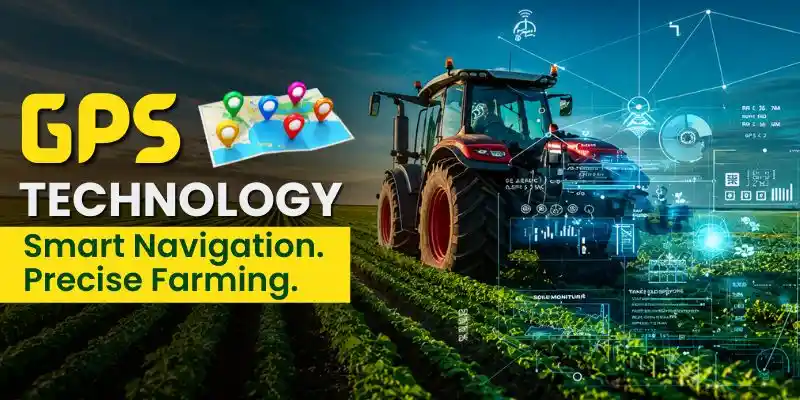
Autonomous tractors depend on GPS navigation and automated guidance systems to move accurately across farmland. Digital route planning allows driverless tractors in farming to complete operations without constant human control. Navigation technologies help machines maintain straight paths, avoid overlapping work areas, and reduce unnecessary fuel consumption.
Autonomous tractor technology tillage systems improve consistency during planting, spraying, and harvesting operations. This level of precision helps farmers manage large agricultural fields more effectively.
Robotics and Automated Farming Operations
Agriculture robots are now being used for planting, crop spraying, harvesting, irrigation, and weed management. Agricultural robot sprayer systems apply fertilizers and pesticides more precisely, helping reduce chemical overuse and improving crop protection.
Farm harvesting robots are increasingly important in fruit and vegetable farming because they can operate for long periods with consistent performance. Agricultural robot weeder systems also improve weed control while reducing the need for manual labor and repetitive fieldwork.
IoT Sensors, Cloud Computing, and Data Analytics
IoT sensors play an important role in collecting live information from agricultural fields. These devices track weather conditions, soil moisture, crop performance, and machine activity throughout the farming cycle. The collected information is processed through cloud computing systems that allow farmers to monitor operations remotely.
Data analytics platforms help farmers understand field conditions more clearly and improve planning decisions. This connected approach supports better coordination between farming equipment, monitoring systems, and resource management tools.
Autonomous Farming Equipment and Smart Automation
Autonomous farming equipment combines robotics, digital monitoring, and automated controls into a connected farming system. These machines can complete agricultural operations with minimal human involvement while adjusting performance according to changing field conditions.
Smart farming automation improves operational consistency and reduces delays during important farming activities. By combining precision technology with automated machinery, agriculture robots are helping farms become more productive, efficient, and sustainable.
Types of Agriculture Robots Used in Farming
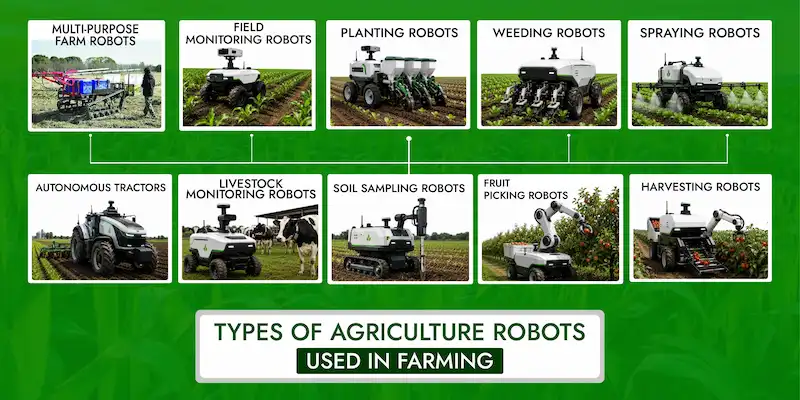
Autonomous tractors use GPS navigation, sensors, and digital controls to move across fields and complete tasks without a driver on board. Autonomous electric tractors are also gaining attention because they cut fuel dependency and support greener farming. Large farms are adopting driverless tractors to manage more land with fewer workers.
Agricultural Robot Sprayers
An agricultural robot sprayer uses sensors and smart monitoring to apply fertilizers and pesticides only where they are needed. This precision spraying lowers chemical use, reduces costs, and minimizes environmental impact while keeping crops protected.
Harvesting and Fruit Picking Robots
Farm harvesting robots use cameras, sensors, and computer vision to spot ripe produce and pick it carefully. An agriculture robot picking fruit can work long hours, keep harvesting speed steady during peak season, and reduce crop damage.
Weeding and Crop Monitoring Robots
An agricultural robot weeder uses imaging tools to remove weeds without harming nearby crops. An agriculture rover robot moves through fields collecting data on plant health, soil conditions, and crop growth, helping farmers spot problems earlier.
Greenhouse and Indoor Farming Robots
Agricultural robots in greenhouses automate planting, watering, harvesting, and crop inspection while keeping temperature and humidity stable. This reduces labor dependency and improves productivity in controlled farming environments.
Real-World Examples and Agricultural Robotics Projects
Agricultural robotics has moved well beyond research labs. Countries worldwide are already using agriculture robots, autonomous tractors, and smart farming automation to boost productivity, reduce labor dependency, and manage operations more efficiently.
United States
The US leads in agricultural robotics innovation, with many agriculture robotics companies in USA building autonomous tractors, robotic harvesters, and precision farming systems for large farms. John Deere has introduced driverless tractor projects using GPS, cameras, and AI to improve planting accuracy and cut fuel use. Automated spraying and AI-powered crop monitoring are also growing across American farms.
Japan
With an aging farming population and labor shortages, Japan is a major contributor to farming robotics. Farming autonomous robots there handle fruit harvesting, planting, field monitoring, and greenhouse management, easing the physical workload where workers are scarce.
China
China is rapidly expanding AI-driven automation across large farming regions. Autonomous tractors, agricultural drones, crop monitoring robots, and automated irrigation help manage vast areas with precision, while Chinese companies develop AI-powered machinery for planting, spraying, and harvesting with less labor.
Europe
European countries are investing in agricultural field robots and sustainable farming technology. Projects focus on robotic weed control, automated crop inspection, and precision spraying that reduce chemical use and environmental impact while keeping farms productive.
AI Agriculture Robots vs Traditional Farming Machinery
| Factor | AI Agriculture Robots | Traditional Farming Machinery |
| Operation | Agriculture robots perform farming tasks automatically using sensors, GPS systems, and artificial intelligence. These machines can operate with minimal human involvement during planting, spraying, and harvesting activities. | Traditional machinery depends heavily on manual control and continuous operator involvement during field operations. |
| Precision | AI-powered agriculture robots provide high accuracy through automated navigation, digital monitoring, and data-driven decision making. This improves consistency during farming operations. | Traditional machines provide moderate precision because performance mainly depends on operator skill and manual adjustments. |
| Labor Requirement | Autonomous tractors and robotic farming systems reduce the need for large labor teams by automating repetitive agricultural tasks. | Conventional farming equipment requires more workers for operation, monitoring, and field management activities. |
| Monitoring | Smart farming automation supports real-time monitoring through cameras, sensors, and connected digital systems. Farmers can track field conditions continuously. | Monitoring is mainly done through manual inspection, which takes more time and may reduce operational efficiency on large farms. |
| Productivity | Agriculture robots can work continuously for long hours with consistent performance, helping farms complete operations faster and more efficiently. | Traditional machinery is limited by operator working hours, fatigue, and manual operational constraints. |
| Cost Efficiency | Although installation costs may be higher initially, AI agriculture robots often provide better long-term efficiency through reduced labor costs, improved resource management, and lower operational waste. | Traditional farming equipment may involve lower starting costs but usually leads to higher long-term operational expenses due to fuel usage, labor dependency, and less efficient resource management. |
Advantages and Disadvantages of Agriculture Robots
Agriculture robots are improving efficiency, reducing physical workload, and supporting precision farming. But despite the growth of smart farming automation, agricultural robotics also brings technical and financial challenges that can slow adoption in some regions.
Advantages of Agriculture Robots
- Higher productivity: AI-powered agriculture robots handle planting, spraying, monitoring, and harvesting faster and more consistently
- Lower labor costs: Autonomous tractors automate repetitive, physically demanding tasks, easing labor shortages
- Better precision farming: GPS, sensors, and digital monitoring enable precision spraying and targeted irrigation with less waste
- Efficient resource use: Water, fertilizers, pesticides, and fuel are applied based on real-time field conditions
- Faster operations: Driverless tractors in farming work for long hours without fatigue, helping farms finish seasonal tasks on time
- Improved crop monitoring: An agriculture monitoring robot tracks crop health and soil conditions, so problems are caught early
Disadvantages of Agriculture Robots
- High investment cost: Autonomous farming equipment and sensors need heavy upfront spending, especially for small farmers
- Technical complexity: AI, software, and GPS systems may require specialized training
- Infrastructure needs: Stable internet and electricity are essential, and often limited in rural areas
- Automation dependence: Software issues or sensor failures can interrupt farm operations
- Maintenance demands: Regular servicing and updates can raise costs over time
- Limited small farm access: Financial and infrastructure barriers slow adoption in developing regions
Despite these challenges, agricultural robots and autonomous tractors are becoming essential for productivity, precision farming, and future food demand.
Future of Agriculture Robots and Autonomous Tractors
Imagine a farm where tractors drive themselves, robots pick the ripest fruit, and drones watch over every acre. That future is closer than most people think. With labor shortages, climate challenges, and rising food demand, agriculture robots and autonomous tractors are set to play a much bigger role in everyday farming.
Fully Autonomous Farming Systems
Future farms will run on connected machines that need very little human input.
- Agriculture robots, drones, and smart monitoring devices working together
- Automatic planting, irrigation, spraying, and harvesting
- Fewer delays caused by labor shortages
Autonomous Tractors: The Future of Farming
Driverless tractors are expected to become standard on large farms.
- Advanced GPS, intelligent sensors, and real-time decision systems
- Multiple farming tasks handled with greater precision
- Autonomous electric tractors for lower fuel use and greener farming
AI-Driven Crop Monitoring and Harvesting
Farming AI robots with advanced cameras will make monitoring and harvesting smarter.
- Early disease detection and plant growth tracking
- Accurate harvest readiness identification
- Faster farm harvesting robots with less crop damage
Smart Agriculture Ecosystems
Machines, sensors, drones, and irrigation systems will connect through IoT and cloud platforms.
- Real-time communication between farming technologies
- Fields, equipment, and crops monitored from one dashboard
- Faster decisions and better resource management
Affordable Agricultural Robotics for Small Farms
As costs fall, agricultural robotics will reach small and medium farms.
- Compact, lower-cost farming robots
- Simplified smart farming tools
- Precision agriculture benefits without heavy investment
Conclusion
Agriculture robots and autonomous tractors are transforming modern farming by improving efficiency, reducing labor dependency, and supporting precision agriculture. As workforce shortages, rising costs, and global food demand keep growing, smart farming automation and agricultural robotics are becoming essential for productive, resource-smart farms.
The good news is that you don’t have to replace everything at once. Here is how to start:
- Begin with small automation tools or precision monitoring systems
- Add autonomous farming equipment step by step as your farm grows
- Build your knowledge of agricultural robotics to stay ahead of change
The future of farming is more connected, precise, and technology-driven. Farmers who start exploring agricultural robotics today will be better prepared for the demands of modern agriculture tomorrow.
FAQs
1. What are agriculture robots?
Agriculture robots are automated machines that handle farming tasks like planting, spraying, harvesting, crop monitoring, and weed control with minimal human effort. They help farmers work more efficiently, reduce labor dependency, and manage operations with greater accuracy.
2. How do autonomous tractors work?
- Farmers program routes and tasks digitally before work begins
- GPS navigation, sensors, and cameras guide the tractor across the field
- Automated controls keep direction, speed, and operation accurate
3. What are the benefits of agricultural robots?
- Higher farming productivity and operational accuracy
- Less manual labor and better resource management
- Support for precision farming with less waste and more consistency
4. Can small farmers use autonomous farming equipment?
Yes. As agricultural technology becomes more affordable, compact robotic tools and smart monitoring systems are reaching small and medium farms. Many farmers start with basic smart farming technologies and add larger automated systems later.
5. Which technologies are used in agricultural robotics?
Agricultural robotics combines artificial intelligence, GPS navigation, IoT sensors, machine learning, computer vision, cloud computing, and automated control systems. Together, they power crop monitoring, autonomous navigation, precision spraying, and smart farming automation.



- Be Respectful
- Stay Relevant
- Stay Positive
- True Feedback
- Encourage Discussion
- Avoid Spamming
- No Fake News
- Don't Copy-Paste
- No Personal Attacks
- Be Respectful
- Stay Relevant
- Stay Positive
- True Feedback
- Encourage Discussion
- Avoid Spamming
- No Fake News
- Don't Copy-Paste
- No Personal Attacks
