Precision Farming: A Complete Guide to Smart Agriculture, Technologies, and Benefits
Published: 26 Aug 2026
Farming isn’t just about hard work anymore. It’s about making the right decision at the right time. With rising input costs, unpredictable weather, and growing demand for higher productivity, traditional methods are struggling to keep up.
Precision farming is changing that. Using data, technology, and real-time insights, it helps farmers manage crops with accuracy, applying the right input to the right area instead of treating the whole field the same way.
In this guide, you’ll learn how precision farming works, the technologies behind it, and how it’s applied in real farming environments, along with its benefits, challenges, and future potential.
What Is Precision Farming?
Precision farming, or precision agriculture, uses data and technology to manage crops with high accuracy, applying the right input at the right place and time instead of treating the whole field the same way.
It combines sensors, satellite imagery, AI, and automated machinery to monitor soil, weather, and crop health in real time, helping farmers boost productivity and sustainability.
Key Features of Precision Farming:
- Data-driven decisions instead of guesswork
- Targeted use of water, fertilizers, and pesticides
- Continuous monitoring of soil and crop conditions
- Integration of advanced technologies for efficiency
How Precision Farming Works
Precision farming works in four key steps:
Step 1: Understanding Field Variability
Every field varies in soil quality, moisture, and crop growth, even within small areas. Precision farming replaces uniform practices with a targeted approach based on these differences.
- Identifies variations in soil and crop conditions
- Enables targeted, area-specific farming
- Reduces overuse of water and chemicals
Step 2: Using Advanced Technologies
Modern tools collect and analyze field data to guide accurate decisions.
- IoT sensors – track soil moisture, temperature, and nutrients in real time
- Satellite imagery – gives a complete view of crop health
- AI – predicts outcomes and recommends actions
- Drones – monitor fields and apply treatments precisely
Step 3: Real-World Applications and Results
Countries like the US and Canada already use precision farming at scale, with strong results.
- Higher crop yields through accurate management
- Reduced fertilizer and water usage
- Lower operational costs
- Improved sustainability
Step 4: Future of Farming and Emerging Opportunities
As farms become more connected, decision-making is shifting from manual observation to data. This is creating new roles for skilled professionals.
- Rising demand for data-driven farming skills
- New careers in agri-tech and system management
- Growing use of robotics and automation
- Wider adoption of sustainable practices
Precision farming isn’t just a tech upgrade. It’s a complete shift in how agriculture operates, helping farmers produce more with fewer resources while staying sustainable long-term.
Key Principles of Precision Farming
Site-Specific Management
Different areas of a field have different needs. Precision farming identifies these variations and applies the right treatment to each specific area. This improves efficiency and avoids unnecessary use of resources.
Data-Driven Decisions
Farmers rely on real-time and historical data to guide their actions. This reduces guesswork and supports more accurate planning and execution.
Efficient Resource Use
Precision farming optimizes the use of water, fertilizers, and pesticides. This lowers costs and minimizes environmental impact while maintaining high productivity.
Continuous Monitoring
Fields are monitored regularly using advanced tools. This helps detect issues early and allows farmers to respond quickly to changing conditions.
Why Smart Farming is Important
Modern agriculture faces constant pressure: unpredictable weather, rising costs, and limited water and soil, while demand for food keeps growing. Traditional methods often fall short, and this is where smart farming, powered by precision agriculture, makes the real difference.
Here’s why it matters for every stage of crop production:
- Reduces waste – targets water, fertilizers, and pesticides to actual field needs instead of blanket application
- Improves decision-making – uses real-time data instead of guesswork, helping farmers act fast on changing conditions
- Supports sustainability – conserves natural resources and cuts environmental impact through smarter input use
- Boosts yield and profitability – increases accuracy while lowering costs for stronger overall results
Technologies Used in Digital Farming
Precision farming relies on a combination of advanced technologies to collect data, analyze field conditions, and guide farming decisions. These technologies work together to improve accuracy, reduce waste, and increase productivity.
GPS Technology
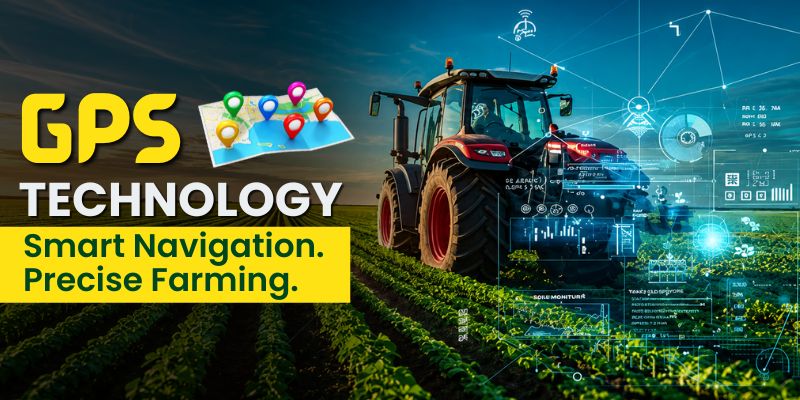
The Global Positioning System helps farmers map their fields and track equipment with high accuracy. It allows precise planting, fertilizing, and harvesting by guiding machinery along exact paths. This reduces overlap and ensures efficient use of inputs.
IoT Sensors
Internet of Things sensors are placed in the soil and across the field to collect real-time data. They measure moisture levels, temperature, and nutrient content. This helps farmers monitor field conditions continuously and respond quickly when needed.
Drones and Satellite Imaging
Drones and satellites capture images of crops from above. These images help identify areas with poor growth, water stress, or disease. Farmers can use this information to take targeted action instead of treating the entire field.
Artificial Intelligence and Data Analytics
AI systems analyze large amounts of data collected from different sources. They provide insights, detect patterns, and suggest actions for better crop management. This improves decision-making and reduces guesswork.
Farm Management Software
Farm management platforms organize all data in one place. They help farmers plan activities, track performance, and manage resources efficiently. This improves coordination and supports better long-term planning.
These technologies form the foundation of precision farming. By combining data collection, analysis, and automation, they enable farmers to manage their fields with greater accuracy and control.
Difference Between Precision Agriculture and Conventional Agriculture
Precision agriculture and conventional agriculture differ mainly in how farmers manage resources and make decisions. Conventional methods rely on uniform treatment of fields and farmer experience, while precision agriculture uses data and technology to manage fields more accurately.
Key differences
| Feature | Precision Agriculture | Conventional Agriculture |
| Approach | Uses data and technology to manage fields | Relies on traditional methods and experience |
| Resource Use | Applies water, fertilizers, and pesticides based on specific needs | Applies inputs uniformly across the entire field |
| Decision Making | Based on real-time data and analysis | Based on observation and past experience |
| Efficiency | High efficiency with minimal waste | Lower efficiency with possible overuse of inputs |
| Cost Management | Reduces long-term costs through optimization | May increase costs due to excess input use |
| Crop Yield | More consistent and often higher yields | Yields may vary depending on conditions |
| Environmental Impact | Lower impact due to controlled usage of resources | Higher impact due to overuse of chemicals |
| Technology Use | Uses GPS, sensors, drones, and AI tools | Limited use of advanced technology |
Precision agriculture focuses on accuracy, efficiency, and sustainability, while conventional agriculture depends more on generalized practices. As farming challenges increase, many farmers are shifting toward precision agriculture to improve productivity and reduce costs.
Countries Where Precision Farming Is Used
Precision farming is adopted across different regions, but the level of use depends on access to technology, farm size, and investment capacity. Developed countries focus on efficiency and automation, while developing nations are gradually adopting these practices to improve productivity. This global spread shows how agriculture is shifting toward data-driven decision making.
United States
The United States leads in precision farming due to its advanced technology and large-scale farming operations. Farmers rely on GPS-guided machinery, data analytics, and automated systems to manage crops with high accuracy. This approach helps reduce input waste while improving yield and profitability.
- Extensive use of GPS-guided equipment
- Advanced data-driven decision making
- Optimized use of fertilizers and pesticides
Canada
Canada has widely adopted precision farming, particularly in grain and wheat production. Farmers use modern equipment and monitoring systems to manage large agricultural lands efficiently. The country’s climate conditions also encourage the use of precise resource management techniques.
- Strong presence in large-scale grain farming
- Use of sensors and monitoring tools
- Focus on efficiency in challenging climates
Germany and Netherlands
In Europe, Germany and the Netherlands are known for advanced agricultural technologies. Farmers use sensors, automation, and data platforms to monitor crops and soil conditions in real time. These methods allow high productivity even with limited land resources.
- Adoption of smart greenhouses
- Real-time crop and soil monitoring
- High efficiency with limited farmland
Australia
Australia uses precision farming to manage water scarcity and large agricultural areas. Farmers depend on smart irrigation systems and satellite data to optimize crop production. This approach ensures efficient resource use in dry and remote regions.
- Smart irrigation for water conservation
- Use of satellite-based monitoring
- Efficient farming in arid conditions
China
China is rapidly expanding its precision farming practices through strong investment and government support. Farmers are increasingly using drones, artificial intelligence, and automated systems to improve productivity. This shift is driven by the need to meet growing food demand.
- Use of drones for crop monitoring and spraying
- Integration of artificial intelligence
- Large-scale adoption across regions
India
India is gradually adopting precision farming technologies. Farmers are beginning to use mobile-based solutions, sensors, and drone services to improve efficiency. Government programs and startups are helping make these technologies more accessible.
- Growing use of digital farming tools
- Introduction of IoT and drone technology
- Focus on improving small farm productivity
Pakistan
Pakistan is still in the early stages of precision farming adoption. Awareness is increasing, and farmers are slowly exploring modern techniques such as smart irrigation and crop monitoring. Despite challenges, the country has strong potential due to its reliance on agriculture.
- Limited but increasing adoption of modern tools
- Rising interest in smart irrigation systems
- High growth potential in the agriculture sector
Precision farming continues to expand globally, but adoption remains uneven. Developed countries focus on optimizing efficiency, while developing regions aim to improve productivity and resource management. This contrast highlights both the progress achieved and the opportunities that still exist in modern agriculture.
Applications of Precision Agriculture Across Different Farming Systems
Precision agriculture is applied across a wide range of farming systems where accurate data and efficient resource management can improve outcomes. It is not limited to a specific region or farm size, but is used wherever farmers aim to increase productivity while reducing waste. Its flexibility allows it to adapt to different crops, environments, and agricultural practices.
Crop Farming
Precision agriculture is widely used in the production of major crops such as wheat, rice, corn, and cotton. Farmers use data from sensors and monitoring tools to assess soil conditions, nutrient levels, and crop health. This approach ensures that each section of the field receives the right inputs, leading to better yield and reduced resource use.
- Improves soil and nutrient management
- Enhances crop yield and quality
- Reduces unnecessary use of fertilizers and chemicals
Horticulture and Fruit Farming
In horticulture, precision agriculture helps farmers manage fruits, vegetables, and orchards with greater accuracy. Monitoring systems track plant health and environmental conditions, allowing farmers to adjust irrigation and nutrient supply as needed. This results in consistent quality and improved production efficiency.
- Supports precise irrigation and nutrient control
- Improves fruit and vegetable quality
- Reduces losses caused by poor management
Large-Scale Commercial Farms
Large farms benefit significantly from precision agriculture due to the scale of their operations. Technologies such as GPS-guided machinery and drones enable accurate planting, spraying, and harvesting. This level of control helps reduce operational costs and improve overall efficiency.
- Enables accurate field operations at scale
- Reduces labor and operational costs
- Increases efficiency in large farming areas
Greenhouses and Controlled Environments
Precision agriculture is highly effective in greenhouses where environmental conditions can be managed. Sensors and automated systems control temperature, humidity, and irrigation to create ideal growing conditions. This allows farmers to maintain consistent production throughout the year.
- Maintains optimal growing conditions
- Supports automated climate control
- Ensures consistent crop production
Livestock Farming
Precision agriculture is also used in livestock management to monitor animal health and behavior. Farmers use tracking systems and data analysis to manage feeding, movement, and overall well-being. This improves productivity and helps prevent losses.
- Monitors animal health and activity
- Improves feeding efficiency
- Reduces risks of disease and loss
Regions with Resource Challenges
Precision agriculture is particularly valuable in areas facing water shortages, poor soil quality, or changing climate conditions. Farmers use technology to manage limited resources more effectively and maintain stable production levels. This makes it an important tool for sustainable agriculture in challenging environments.
- Optimizes use of limited water resources
- Helps manage poor soil conditions
- Supports farming in changing climates
Precision agriculture is not restricted to one type of farming system. Its ability to adapt to different conditions makes it a practical solution for improving efficiency, sustainability, and overall farm performance across the agricultural sector.
Advantages and Disadvantages of Precision Farming
Precision farming offers significant benefits by improving efficiency, increasing crop yield, and reducing the waste of resources through data-driven decisions. It also supports environmental sustainability and lowers long-term operational costs. However, it requires high initial investment, technical knowledge, and reliable infrastructure, which can limit its adoption, especially for small-scale farmers.
Advantages
Followings are the advantages:
- Improves crop yield and productivity
Precision farming allows farmers to manage crops based on specific field conditions, leading to better growth and higher output. It ensures that each area receives the care it needs for optimal performance. - Reduces waste of resources
Inputs such as water, fertilizers, and pesticides are applied only where required. This minimizes unnecessary usage and improves overall efficiency. - Saves operational costs
By avoiding overuse of inputs and reducing manual labor, farmers can lower production costs. Over time, this leads to better financial returns. - Enhances decision making
Real-time data from sensors and monitoring systems helps farmers make accurate and timely decisions. This reduces uncertainty and improves planning. - Supports environmental sustainability
Reduced use of chemicals and better resource management help protect soil, water, and surrounding ecosystems. This promotes long-term agricultural sustainability. - Reduces labor requirements
Automation and advanced machinery handle tasks such as irrigation and spraying. This decreases dependence on manual labor and saves time. - Improves crop quality
Targeted management results in more uniform and healthier crops. This improves market value and consistency in production. - Better monitoring of farm conditions
Continuous tracking of soil and crop health allows early detection of issues. Farmers can respond quickly to prevent losses.
Disadvantages
Followings are the disadvantages:
- High initial investment
Precision farming requires expensive equipment such as sensors, drones, and automated machinery. This makes it difficult for small farmers to adopt. - Requires technical knowledge
Farmers need training to understand and operate advanced technologies. Without proper skills, the system may not be used effectively. - Dependence on technology
Farming operations rely heavily on digital tools and data systems. Any technical failure can disrupt the workflow. - Limited infrastructure in some regions
Poor internet connectivity and lack of support systems can restrict the use of precision farming. This is a major challenge in developing areas. - Maintenance costs
Advanced equipment requires regular maintenance and updates. These ongoing costs can add to the financial burden. - Risk of inaccurate data
Incorrect or incomplete data can lead to wrong decisions. This may affect crop performance and reduce efficiency. - Not easily accessible for small farmers
Due to high costs and limited awareness, small-scale farmers may find it difficult to implement precision farming. - Slow adoption rate
Resistance to change and lack of awareness can delay the adoption of new technologies. Many farmers still rely on traditional methods.
Future of Smart Farming
The future of precision farming is moving toward fully connected, intelligent agricultural systems, where real-time data drives every decision. Key trends shaping this future include:
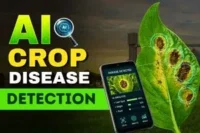
- AI and machine learning – predicting crop performance, detecting diseases early, and improving over time with minimal human input
- Automation – autonomous tractors, robotic harvesters, and smart irrigation reducing labor dependency, with affordable versions reaching smaller farms too
- Unified platforms – combining data from multiple sources into one system for simpler, more effective farm management
- Sustainability – reduced water usage, lower chemical inputs, and improved soil health for long-term productivity
- Evolving farmer roles – growing demand for skills in data analysis, technology, and equipment management
As technology becomes more accessible, precision farming will continue driving smarter, more efficient, and more sustainable agriculture.
Conclusion
Precision farming is transforming agriculture by combining technology with practical field management. From understanding how it works to exploring its benefits, challenges, and real-world applications, one thing is clear: it plays a growing role in modern farming.
As farmers look to boost productivity while managing costs and protecting natural resources, even small steps toward adopting precision farming can lead to noticeable improvements in efficiency and yield.
Those who start exploring these methods now will be better prepared for the future of agriculture.
FAQs
1. What is precision farming and how does it work in agriculture?
Precision farming uses data and technology to manage crops more efficiently. It works through:
- Sensors, drones, and satellites collecting real-time field data
- Farmers using that data to make smarter irrigation and fertilizer decisions
- Better yield with less waste as a result
2. What are the advantages of precision farming for small farmers?
Small farmers benefit from better resource control, lower costs, and improved crop quality. That said, the initial technology investment can still be a barrier for many.
3. Which technologies are used in precision farming systems?
Precision farming relies on GPS, IoT sensors, drones, satellite imaging, and AI. Together, these tools help monitor soil, weather, and crop conditions, making farming far more accurate and efficient.
4. How does precision farming help in water management?
Precision farming ensures water is used only where needed. Soil moisture sensors guide irrigation decisions in real time, cutting waste and supporting healthier crops, especially in water-scarce regions.
5. What is the difference between precision farming and traditional farming?
- Precision farming: manages fields based on specific, real-time conditions
- Traditional farming: treats the whole field the same way, relying on experience and general practices
- Result: precision methods reduce waste and improve efficiency


- Be Respectful
- Stay Relevant
- Stay Positive
- True Feedback
- Encourage Discussion
- Avoid Spamming
- No Fake News
- Don't Copy-Paste
- No Personal Attacks
- Be Respectful
- Stay Relevant
- Stay Positive
- True Feedback
- Encourage Discussion
- Avoid Spamming
- No Fake News
- Don't Copy-Paste
- No Personal Attacks
