Role of AI in Agriculture Smart Farming Guide For Farmers
Published: 13 Apr 2026
Farming is becoming more difficult with changing weather, rising costs, and the growing demand for food, leaving many people unsure how to keep up with modern challenges. At the same time, new technologies are entering agriculture, but not everyone understands how they actually help in real life. This can make the whole idea feel confusing or even overwhelming. Don’t worry this guide will walk you through everything in a simple and clear way. You will learn how smart farming is evolving and understand the role of AI in agriculture and how it is changing everything.
Artificial intelligence is changing how farming works by making it more data-driven and efficient. Instead of relying only on traditional methods, farmers can now use smart tools to make better decisions. This helps improve crop production, save resources, and reduce risks.
The role of artificial intelligence in agriculture is to use smart technologies and data analysis to help farmers monitor crops, predict outcomes, automate tasks, and improve overall farming efficiency.
Farmers must know all these points:
These are the following points that every farmer should know for the betterment of crops.
Basic Farming Practices
Understanding how traditional farming works helps you see where AI can improve efficiency and reduce manual effort.
Data and Technology Basics
Knowing how data is collected and used makes it easier to understand how AI gives accurate insights and predictions.
Common Agricultural Challenges
Awareness of issues like weather changes, pests, and low productivity helps you understand why AI solutions are important.
Use of Smart Tools
Familiarity with tools like sensors, drones, or mobile apps helps you see how AI is applied in real farming situations.
Importance of Decision-Making
Farming often depends on timely decisions, and AI helps make those decisions more accurate and reliable.
Applications of AI in Farming:
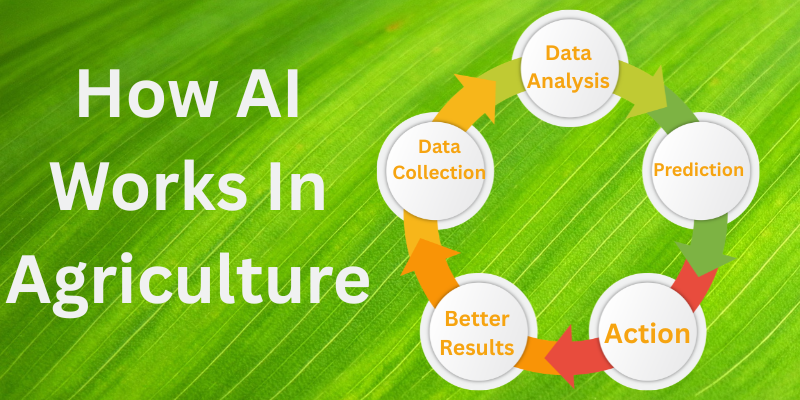
AI is making farming smarter by helping farmers make better decisions at every stage. It uses data, sensors, and smart tools to improve crop growth and reduce waste. If you are a beginner, here is a simple and clear process to understand how it works in real farming.
Collecting Farm Data
Farmers start by collecting important data from their fields. They use sensors, drones, and mobile apps to gather information about soil condition, moisture levels, temperature, and crop health.
This data forms the foundation of AI. Accurate data leads to better results and smarter decisions.
Analyzing Soil and Crop Health
AI tools then analyze the collected data to understand soil quality and crop condition. These tools identify nutrient levels and detect early signs of stress in plants.
This helps farmers take quick action and improve crop growth.
Predicting Weather and Risks
AI studies weather patterns and predicts future conditions such as rainfall, temperature, and storms. It also alerts farmers about risks like droughts or pest attacks.
With this information, farmers can plan ahead and protect their crops.
Detecting Crop Diseases Early
AI scans images of crops and identifies diseases at an early stage. Farmers can use smartphones or cameras to detect problems before they spread.
Early detection reduces crop loss and improves productivity.
Managing Smart Irrigation
AI controls irrigation systems by deciding when and how much water crops need. It uses real-time data to avoid overwatering or underwatering.
This saves water and ensures healthy crop growth.
Using AI-Powered Machines and Robots
Farmers use AI-powered machines to perform tasks like planting, spraying, and harvesting. These machines work faster and with greater accuracy.
They reduce manual labor and increase efficiency.
Operating Autonomous Tractors
AI enables tractors to operate without human drivers. These tractors follow programmed paths and complete tasks efficiently.
They can work longer hours and improve farm productivity.
Making Smart Farming Decisions
AI combines all collected data and provides useful insights. Farmers use these insights to make better decisions about planting, harvesting, and resource management.
This leads to higher productivity and better results with less effort.
Benefits of Artificial Intelligence in Agriculture
Artificial intelligence is improving modern farming by making it more efficient, accurate, and data-driven. Farmers can manage crops, resources, and risks with better control. This leads to higher productivity and more sustainable agricultural practices.
Increased Crop Yield
AI helps farmers grow more crops by analyzing soil conditions, weather data, and plant health. It guides the right timing for planting, fertilizing, and harvesting, which improves overall output and quality.
Precision Farming and Resource Efficiency
AI enables precision farming by applying water, fertilizers, and pesticides only where needed. This reduces waste and ensures efficient use of resources while maintaining strong crop performance.
Early Detection of Crop Diseases
AI systems identify crop diseases at an early stage through image analysis and data monitoring. Farmers can take quick action to prevent the spread and protect their crops.
Smart Irrigation Management
AI-powered irrigation systems monitor soil moisture and weather conditions in real time. They provide the right amount of water at the right time, which improves crop health and saves water.
Cost Reduction in Farming Operations
AI reduces labor costs by automating repetitive tasks such as planting and harvesting. It also minimizes input waste, which lowers overall farming expenses.
Data-Driven Decision Making
AI processes large amounts of agricultural data and provides useful insights. Farmers can make informed decisions based on accurate information instead of guesswork.
Improved Pest Management
AI tracks pest activity and predicts possible outbreaks. Farmers can take preventive measures early, which helps protect crops and improve yield.
Automation with AI-Powered Equipment
AI-powered machines and robots handle tasks with speed and precision. This increases efficiency and reduces the need for manual labor.
Sustainable Agriculture Practices
AI supports sustainable farming by optimizing the use of water, fertilizers, and chemicals. This reduces environmental impact and promotes long-term growth.
Better Weather Forecasting
AI provides accurate weather predictions that help farmers plan their activities. This reduces risks and improves productivity.
Challenges of Artificial Intelligence in Agriculture
As we know artificial intelligence has its many advantages, artificial intelligence in agriculture also presents several challenges that farmers and businesses need to consider. Understanding these limitations helps in making better decisions and planning effective implementation.
High Initial Cost
Setting up AI systems requires significant investment in hardware, software, and infrastructure. This can be difficult for small and medium-scale farmers who may not have enough financial resources.
Lack of Technical Knowledge
Many farmers are not familiar with advanced technologies. Without proper training and support, it becomes challenging to use AI tools effectively in daily farming activities.
Dependence on Data
AI systems rely heavily on accurate and high-quality data. If the data is incorrect or incomplete, the results can be misleading and affect decision-making.
Limited Access in Rural Areas
Some rural areas lack proper internet connectivity and digital infrastructure. This limits the adoption of AI technologies in many farming regions.
Maintenance and Updates
AI systems require regular monitoring, updates, and technical support. Without proper maintenance, their performance can decline over time.
Future of Artificial Intelligence in Agriculture
Artificial intelligence will continue to reshape agriculture by making farming more intelligent and efficient. Farmers will depend on advanced technologies to handle complex challenges such as climate change, rising costs, and increasing food demand. AI will support faster and more accurate decision-making during all farming activities.
In the future, agriculture will become more data-driven. Farmers will use real-time insights to plan their crops, manage risks, and to increase productivity. This shift will reduce uncertainty and allow better control over farming operations.
AI will also play an important role in making agriculture more sustainable. It will help to decrease the overuse of water, fertilizers, and chemicals while maintaining high crop yields. This balance will support long-term environmental health and food security.
Another major change will be the increased use of automation in farming. Many time-consuming tasks will become faster and more efficient with the help of AI systems. This will reduce dependency on manual labor and improve overall efficiency.
Overall, the future of artificial intelligence in agriculture looks promising. It will not replace farmers but will support them in making quick decisions, improving productivity, and building a more satisfactory and sustainable farming system.
conclusion
We have explored the role of AI in agriculture and how it is transforming modern farming through better decision-making, efficient resource management, and improved productivity. From understanding how it works in real farming scenarios to analyzing its benefits, challenges, and future potential, this guide has provided a complete overview of how agriculture is evolving in today’s world.
It is important to recognize that adopting new technologies is no longer optional but necessary for long-term success. My recommendation is to start small, stay informed, and gradually understand how these advancements can fit into real farming practices. Those who take early steps toward modern methods will be in a stronger position to handle future challenges and opportunities.
As agriculture continues to evolve, continuous learning will play a key role in staying ahead. Keep exploring new ideas, stay updated with upcoming trends, and focus on practical implementation.
That’s all for now, folks. Stay tuned for our upcoming articles and keep learning.
FAQs on Role of AI in Agriculture
The role of AI in agriculture is to help farmers make better decisions using data and smart tools. It supports tasks like crop monitoring, weather prediction, and resource management. This improves efficiency and reduces waste. It also helps farmers increase productivity with less effort.
AI is used to analyze soil, monitor crops, and predict weather conditions. Farmers also use it in machines for planting, spraying, and harvesting. It helps automate many tasks that were done manually before. This makes farming faster and more accurate.
AI helps increase crop yield and reduce farming costs. It saves time by automating repetitive tasks. It also improves decision-making by providing accurate data insights. Overall, it makes farming more efficient and productive.
Yes, AI can detect crop diseases at an early stage. It uses images and data to identify problems in plants. Farmers can take action before the disease spreads. This helps protect crops and reduce losses.
AI analyzes soil conditions, weather patterns, and crop health. It guides farmers on the right time to plant and harvest. It also helps in using the right amount of water and fertilizers. This leads to better and more consistent crop production.
AI can be expensive to set up and maintain. Many farmers may not have the technical knowledge to use it properly. It also depends on accurate data to give correct results. In some areas, lack of internet and infrastructure is a problem.
Yes, AI is becoming an important part of modern farming. It helps solve problems like food demand and climate change. Farmers can work more efficiently with better tools. It will continue to grow and improve agriculture in the future.
Yes, small farmers can also use AI through mobile apps and simple tools. Many solutions are becoming more affordable and easy to use. They can start with small steps and gradually adopt more technology. This helps them improve productivity without large investments.


- Be Respectful
- Stay Relevant
- Stay Positive
- True Feedback
- Encourage Discussion
- Avoid Spamming
- No Fake News
- Don't Copy-Paste
- No Personal Attacks
- Be Respectful
- Stay Relevant
- Stay Positive
- True Feedback
- Encourage Discussion
- Avoid Spamming
- No Fake News
- Don't Copy-Paste
- No Personal Attacks
